
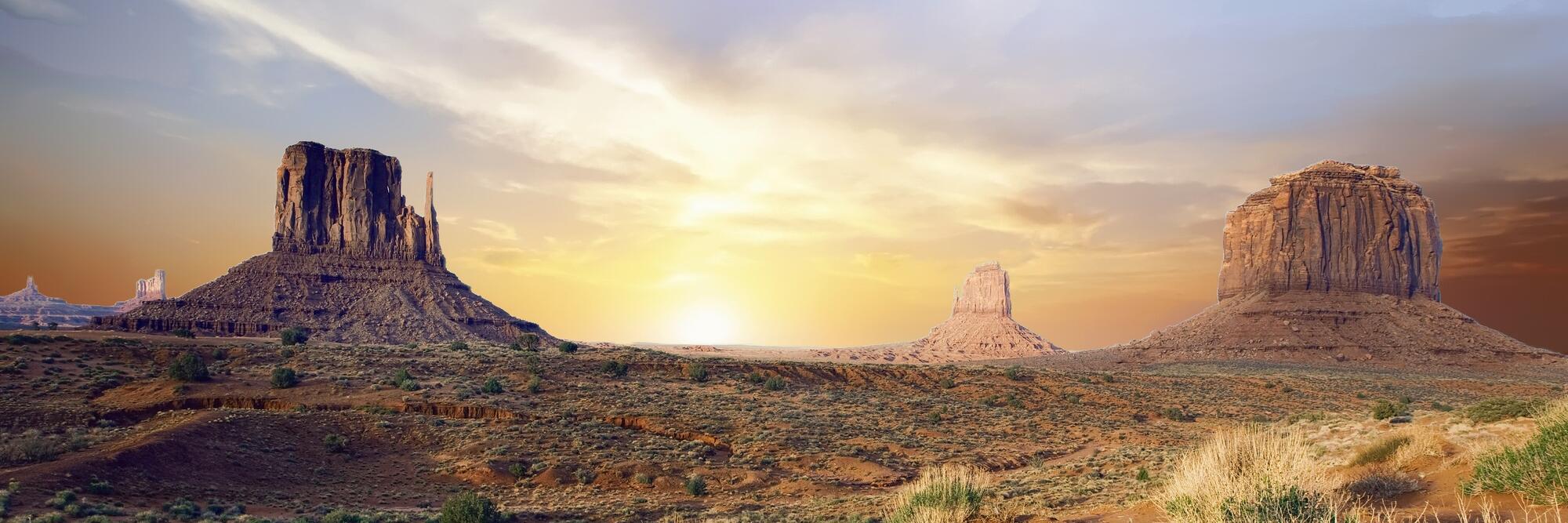
The pros and cons of living in Phoenix deserve careful weighing before you commit to a city built in the middle of the Sonoran Desert. Newcomers who arrive with their eyes open settle in far faster than those sold on the sunshine alone.
Below are the main pros and cons of moving to the Valley of the Sun, drawn from the numbers and from what residents themselves say about the place.
Accommodation in Phoenix
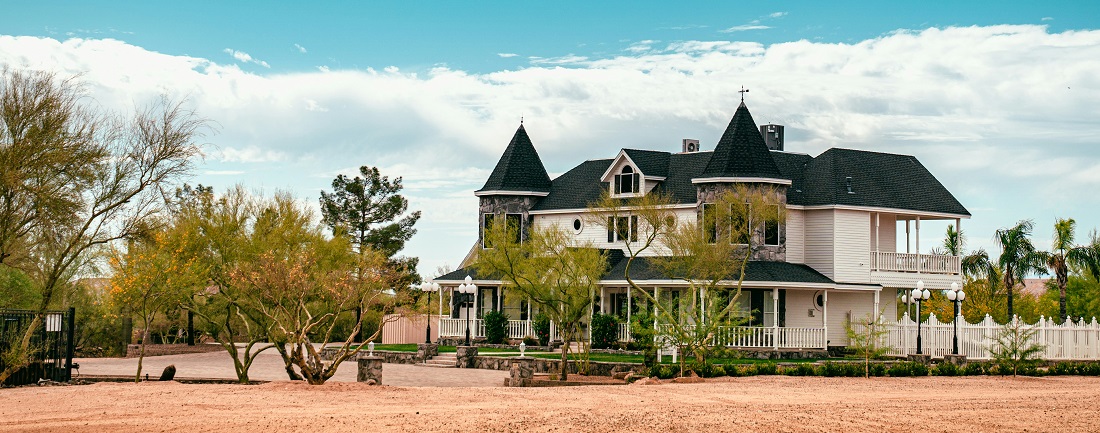
+ PRO: Diverse range of options
House hunting here covers a lot of ground: a high-rise apartment downtown, a craftsman bungalow in a historic district such as Willo or Coronado, a family home with a pool in the suburbs, or a new build in a master-planned community out on the fringe of the Valley. Arcadia, Paradise Valley, Scottsdale, and the Biltmore area are the priciest addresses, and you get the most for your money on the west side.
Sellers pushed prices hard through the pandemic years, but the market has since cooled off. Buyers can negotiate again, and Phoenix is still cheaper than Los Angeles, Seattle, Boston, or the Bay Area, although it is no longer the bargain it was a decade ago.
- CON: HOAs run most of the new builds
Developers put a homeowners’ association on most newer housing in the Valley, and the restrictions are stricter than transplants may expect. Read the association’s documents before you sign. Owners are regularly caught out by the rules on solar panels, casitas, short lets, and even the colour of the front door. Fees are modest by US standards, but the enforcement is not.
Renting Accommodation in Phoenix
Areas and Suburbs in Phoenix
Cost of living in Phoenix
+ PRO: Reasonable cost of living
Living costs here are a shade above the US average, although this is still one of the cheaper big cities to land in, especially compared to the coastal cities. Housing is the main reason for the gap, and you get more square footage for your money than you would in California or the Northeast.
Groceries, petrol, utilities, and eating out are all close to the national average. Utilities are the one to watch, because air conditioning through a Phoenix summer is not cheap.
+ PRO: The lowest flat income tax in the country
Arizona charges a flat state income tax of 2.5 percent, the lowest flat rate in the US, and high earners keep noticeably more of their pay than they would in California or New York. There is no state estate tax and no inheritance tax, and property tax rates are among the lowest in the country. For anyone moving on a senior salary, this is one pro can offset several of the cons.
Working in Phoenix
+ PRO: A strong local economy
Job hunting is a far better proposition here than it was a decade ago. Employers are hiring across semiconductors, healthcare, aerospace, and financial services, and the metro has been adding jobs faster than the country as a whole.
The big change is silicon. TSMC has built out its fabs in north Phoenix, and its suppliers have followed into the West Valley, while Intel and Microchip employ thousands of engineers over in Chandler. Data centres, aerospace and defence, the big hospital networks such as Mayo Clinic and Banner Health, and a growing financial services back office make up much of the rest of the professional job market. Tourism and hospitality still employ large numbers of people, although the pay is nearer the bottom of the scale.
- CON: Salaries are lower than on the coasts
Pay in Phoenix is lower than you would earn for the same job in San Francisco, Seattle, Boston, or New York. The gap is narrowest in semiconductors, engineering, healthcare, and finance, where salaries are competitive with most of the country, and widest in hospitality and retail, where wages are genuinely modest. You do get more for your money here, and most transplants find that the shorter commute and the cheaper mortgage make up the difference.
Lifestyle in Phoenix
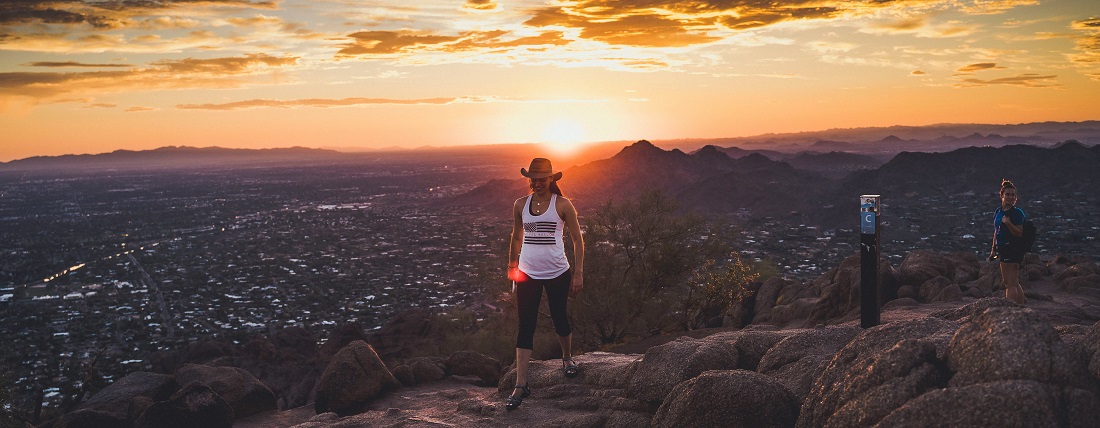
+ PRO: A dream for outdoor enthusiasts
The outdoors is the best of it. You can be hand-over-hand up the boulders of Camelback Mountain before work and out on the Sonoran Preserve trails on the weekend. Kayakers and tubers head for the Salt River, and Phoenix’s world-famous golf courses need no introduction. One caveat: the city closes Camelback and Piestewa Peak when an excessive heat warning is in force, so summer hiking happens at dawn or not at all.
+ PRO: Arts and culture are flourishing
The arts scene is better than the city’s strip mall reputation suggests. The Phoenix Art Museum is the largest in the southwest, and you can see photography from the University of Arizona’s Center for Creative Photography in its Norton gallery, although the centre itself is down in Tucson. The Heard Museum has one of the world’s finest collections of Native American art. The S’edav Va’aki Museum, until recently the Pueblo Grande Museum, is built on a Hohokam platform mound and canal system that predates the city by well over a thousand years.
For the performing arts, the Phoenix Symphony, Arizona Opera, and Ballet Arizona are the three resident companies at Symphony Hall downtown. The Herberger Theater Center next door is home to the Arizona Theatre Company and Childsplay, touring productions come through the Orpheum Theatre, and you can catch the big arena tours at the downtown venue where the Suns and Mercury play.
- CON: State politics may take some adjusting to
Arizona politics can come as a jolt if you arrive from a deep blue city. State lawmakers are conservative on taxes, immigration, policing, and school funding, and gun ownership is common and openly accepted. Phoenix itself is a different animal. The city has elected Democratic mayors for years, voters in Maricopa County have switched between the parties in recent presidential elections, and downtown is as liberal as anywhere in the southwest. What you will not find, in either direction, is a political monoculture.
+ PRO: Sports all year
Few US cities have a team in every major league, and this is one of them: the Suns in men’s basketball and the Mercury as one of the most successful franchises in the WNBA, the Cardinals in football, and the Diamondbacks in baseball. Then there is spring training. Fifteen Major League Baseball teams decamp to the Valley every March for the Cactus League, and the ballparks here are small enough that you get to sit right next to the action.
+ PRO: The weekend escape hatch
When Phoenix gets too much, Sedona’s red rocks are about a two-hour drive north, Flagstaff and its pine forests about two and a half, and the South Rim of the Grand Canyon a bit over three. Tucson is 90 minutes down I-10. A bit farther away, Las Vegas is around five hours away, and San Diego is closer to six.
Weather in Phoenix
+ PRO: 300 days of sunshine a year
Plenty of people move here for the climate and nothing else. Around 300 days a year are sunny or partly sunny, and roughly 210 of those are cloudless from dawn to dusk. From October through April, the weather is close to faultless, and newcomers will love spending those months on the trails, on the golf course, at a spring training game, or beside the pool. Winter here is what other cities call a good summer.
- CON: The summer is brutal
No amount of dry heat talk prepares you for a Phoenix summer. Highs above 110°F (43°C) are routine from June to September, and nighttime lows often don’t drop below 90°F (32°C) because of all the concrete, so the city never really cools off. For about four months of the year, you live indoors and go out after dark, and the city opens cooling centres for people who cannot escape it.
Allergies are another complaint. Olive, mulberry, ash, and juniper pollen are in the air as early as February, not to mention the Bermuda grass in the summer, and ragweed in the autumn. Phoenix does not have an allergy season so much as an allergy year.
- CON: Monsoon dust storms
The Valley gets a handful of true haboobs (mile-high walls of dust) in a typical year, mostly between June and September, and each blows through in well under an hour. Ordinary blowing dust is more frequent, and visibility on the highway can drop to nothing in seconds.
- CON: The water question is not going away
Much of the city’s water comes from the Colorado River, which has been in long-term decline. Phoenix has already refused to certify groundwater for some proposed developments on the far fringes of the Valley, and residents are paying for the squeeze. The city manages its water better than most desert cities, and the central neighbourhoods are well covered, so this is a question of cost and constraint rather than taps running dry.
Weather and Climate in Phoenix
Education in Phoenix
- CON: Public school funding is thin
Arizona spends less per student than almost any other state, and it shows in class sizes and teacher pay. Families in the Valley choose the school district first and the house second, and the difference between neighbouring districts is stark. Schools in Scottsdale, Chandler, Gilbert, and the northeast Valley outperform the state average by a wide margin, while parts of central and west Phoenix struggle.
+ PRO: School choice is unusually wide
Arizona runs one of the largest charter school sectors in the country, and under open enrollment, your child is not tied to the school at the end of the road. The state also funds Empowerment Scholarship Accounts, which parents can put towards private tuition or homeschooling. Phoenix has a long-established set of private and international schools, and several of them offer the International Baccalaureate.
Getting around in Phoenix
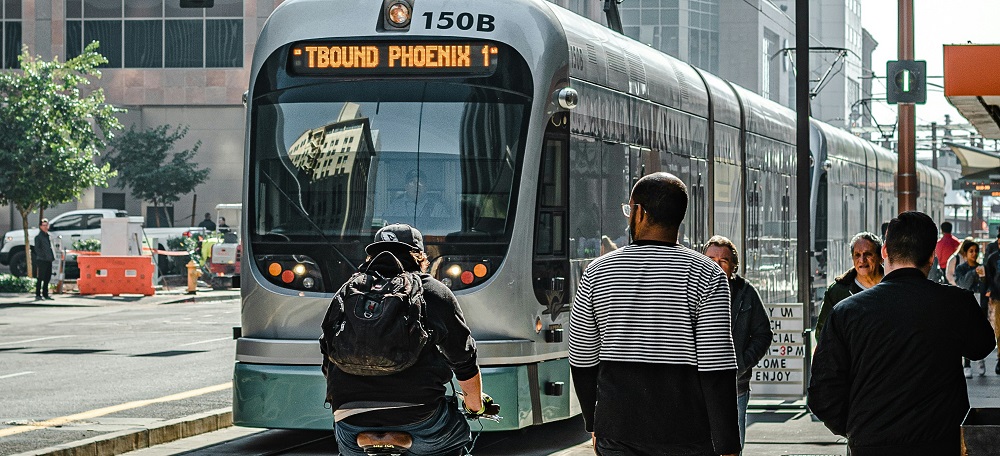
- CON: Public transport is limited
Life without a car is hard work here. Valley Metro runs a two-line light rail network of about 35 miles (56km), but only a thin slice of a metro this size is within walking distance of a station, and the buses are slow.
+ PRO: Phoenix is easy to navigate
Once you have a car, this is one of the easiest cities in America to find your way around. The street plan is a grid with numbered avenues to the west of Central Avenue, numbered streets to the east, and everything counted outwards from Washington Street. Just based on an address’s streets, you can place it on a map before you type it into anything. The Valley has a ring of freeways to move you between the suburbs, and traffic is mild for a metro of this size.
+ PRO: Sky Harbor is on your doorstep
Sky Harbor International Airport is about 10 minutes from downtown and 20 minutes from most central neighbourhoods, which is close to unheard of for a hub of its size. American Airlines and Southwest both operate large bases there, so you can fly nonstop to nearly every sizeable US city, and there are direct flights to Europe. For anyone who flies for a living, this alone offsets a good deal of the heat.