

Expats find banking, money, and taxes in Botswana relatively easy to manage. The Bank of Botswana is the country's central bank, and it oversees a sophisticated, well-run financial system that is among the more stable in the region. Many of the biggest companies doing business in Botswana are listed on the Botswana Stock Exchange (BSE) in the capital, Gaborone.
Botswana did away with exchange controls in 1999, so you can move money in and out of the country without restriction. Foreign investors have long valued both this openness and Botswana's reputation for political stability and prudent economic management. Opening an account and managing your everyday finances is simple enough, though taxes are more complex, as the section below explains.
Money in Botswana
The currency in Botswana is the Pula, abbreviated as BWP. There are 100 thebe to one pula. US dollars and euros are accepted in major hotels and other businesses that cater to international tourists, but you should expect to use pula for all day-to-day transactions.
- Notes: BWP 10, 20, 50, 100 and 200
- Coins: BWP 1, 2 and 5; and 5, 10, 25 and 50 thebe
Currency can be exchanged at banks, licensed bureaux de change, airport terminals, and some hotels.
Banking in Botswana
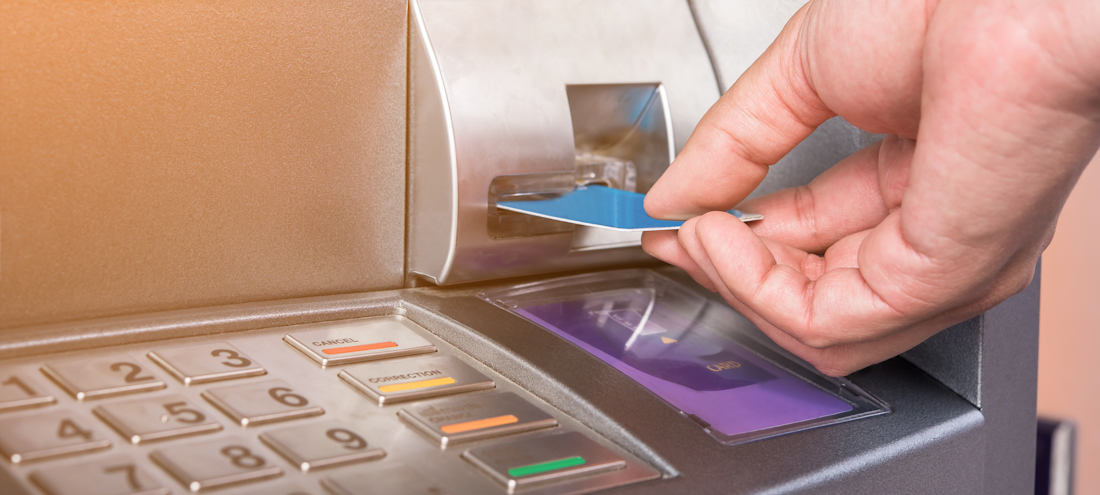
The Bank of Botswana is the country's central bank, and a handful of commercial banks serve everyday customers. The biggest are Absa, First National Bank, Stanbic, and Standard Chartered. Smaller local banks such as Bank Gaborone also compete for customers. Most offer debit and credit cards, online and mobile banking, foreign currency accounts, and investment products.
English is Botswana's official language and the main language of business, so you shouldn't struggle to find English-speaking staff at any bank.
Opening a bank account
Opening a personal account is straightforward once your residency is sorted. You'll usually need your passport, your residence or work permit, a local tax number, and proof of a Botswana address, such as a utility bill. Most employers expect you to have a local account for salary payments, so it's worth opening one in your first week or two. Plenty of expats keep an account back home as well, for savings and transfers.
Banks are generally open from 9am to 3.30pm on weekdays, and some open on Saturday mornings too.
ATMs and credit cards
Visa and Mastercard are widely accepted across Botswana, although American Express and Diners Club can be harder to use. ATMs are easy to find in Gaborone, Francistown, and other main towns, and most larger shops take debit and credit cards. In rural areas, you'll come across far fewer places that accept cards, and many petrol stations and small shops deal only in cash. It's worth keeping some pula on you when you head outside the cities.
Doing Business in Botswana
Local Culture in Botswana
Useful links
Taxes in Botswana
Botswana's tax authorities adjust the rules fairly often, and the system can be tricky to handle on your own. It's worth bringing in a tax specialist who knows the local regime and has worked with expats before.
Tax in Botswana is charged on a source basis. Income from a source inside the country is taxable whether or not you live there. You count as a tax resident if your permanent home is in Botswana and you spend at least 183 days in the country during the tax year.
Residents pay progressive rates. The lowest band is tax-free, and the top rate is around 25 percent. Non-residents don't get the tax-free band and pay tax from the first pula they earn.
Botswana has no separate social security or payroll tax, so income tax is usually the only deduction from your pay. If you have a single employer and your tax is collected through the PAYE system, you often won't need to file a return at all. The tax year is 1 July to 30 June, and you generally have three months after it ends to file your return.
Botswana has double taxation agreements with more than 20 countries, so some expats can claim relief for tax already paid elsewhere. They include France, India, Namibia, South Africa, the UK, and Zimbabwe, among others.