

Healthcare in Botswana is mostly a public-sector affair. The government runs most of the country's clinics and hospitals, up to 98 percent of them. The quality gap between public and private care is wide, though, so most expats take out private health insurance and use private providers.
As in much of Africa, lower-income Batswana rely mainly on the public system, while expats and better-off residents turn to private care. Many Batswana also consult traditional healers or faith healers, who work informally, as Botswana has no formal regulation of traditional medicine.
Care in Botswana's private hospitals is good for most needs, but serious cases are often flown to neighbouring South Africa for treatment.
Public healthcare in Botswana

Public healthcare in Botswana is available to almost everyone. The government runs clinics and hospitals nationwide, and most residents live within a few kilometres of one. Public care is free or charged at a nominal fee, and sexual and reproductive health services and antiretroviral treatment are free.
Doctors and nurses in public hospitals are generally well trained. Public hospitals are short of staff and funding, though, so waiting times can be long, and some services are stretched. The best-equipped public hospitals are in Gaborone, and care outside the capital is more basic; rural facilities, in particular, can be short on equipment and specialists.
Prevention is a major focus of the public system. Botswana has one of the highest HIV rates in the world; around one in five adults is living with HIV. Its response is also among the most effective anywhere. Botswana was one of the first countries in the world to meet the UN's 95-95-95 targets for HIV testing and treatment, and antiretroviral therapy is free and widely available. Testing and counselling are easy to find through clinics and NGOs, and treatment is free.
Carry ID and proof of insurance; in an emergency, it helps make sure you're taken to a private hospital rather than a public one.
Useful links
Private healthcare in Botswana
Private healthcare in Botswana is mostly found in the cities and larger towns, where the standard is generally good, and the main private hospitals are well equipped. Many of the doctors are Batswana who trained abroad and came home to practise, and private hospitals also recruit foreign specialists.
Away from the main towns, there's little private care, and remote areas may have only a mobile clinic or a public health post.
Private care is expensive. Outpatients are usually asked to pay upfront, and even in an emergency, you may be asked for proof of insurance or payment before a private hospital will admit you. Good private cover is worth having, then, so you can be seen quickly and avoid a large upfront bill.
Health insurance in Botswana
Health insurance in Botswana is something most expats sort out before or soon after they arrive. If your employer provides cover, check what it actually includes and whether it's enough for you and your family. If you travel to and from Botswana often or expect to go home regularly, choose an international plan so you're covered wherever you are.
Make sure medical evacuation is included in your policy, since serious cases are often flown to South Africa for treatment. Good cover isn't cheap, especially international policies, so it pays to shop around and compare what's included. Older applicants and anyone with pre-existing conditions will pay more, as will those who want a higher level of cover or a longer policy.
Pharmacies and medication in Botswana
Pharmacies in Botswana are easy to find in the cities and larger towns, less so in rural areas. Look for the green cross sign. English is used on signage and by pharmacy staff, so communication is rarely a problem. The Botswana Medicines Regulatory Authority (BOMRA) licenses pharmacies and regulates what they can sell.
Medicines are either prescription-only or sold over the counter, much as in neighbouring South Africa. Most everyday medicines are easy to get, but the majority are imported from South Africa, so a particular brand you rely on isn't guaranteed to be on the shelf. If you take regular medication, bring enough to cover your first few months, keep a copy of your prescription, and ask your doctor about a local equivalent. Anyone heading to a malaria area should buy antimalarial tablets before travelling, as they aren't always easy to find once you're there.
Useful links
Health hazards in Botswana
The main health hazards in Botswana are mosquito-borne, and malaria is the one to plan around. The risk is highest in the north and centre of the country, particularly in the Okavango Delta and around Chobe, and is greatest during and just after the rainy season, from about November to June. There is little to no malaria in Gaborone or the south in a normal year, although in wetter years it is sometimes found in areas usually considered low risk, so check the current situation before you travel. If you're heading to a risk area, talk to a doctor about antimalarial tablets before you go, sleep under a mosquito net, cover up after dark, and use insect repellent.
Rabies is present in Botswana, mostly in dogs, so get any animal bite seen to straight away. Tick-bite fever is a risk when you're walking in the bush, and there have been occasional cases of anthrax. Bilharzia (schistosomiasis) is common in the fresh water of the Okavango Delta and the country's rivers, so avoid swimming or wading in still or slow-moving water.
Tap water in the towns and cities is treated and generally safe to drink, although some residents prefer bottled or filtered water for taste. In rural and remote areas, stick to bottled or purified water to be safe. The heat and strong sun are worth respecting too, so drink plenty of water, wear sunscreen, keep your head covered, and stay out of the midday sun.
Vaccinations for Botswana
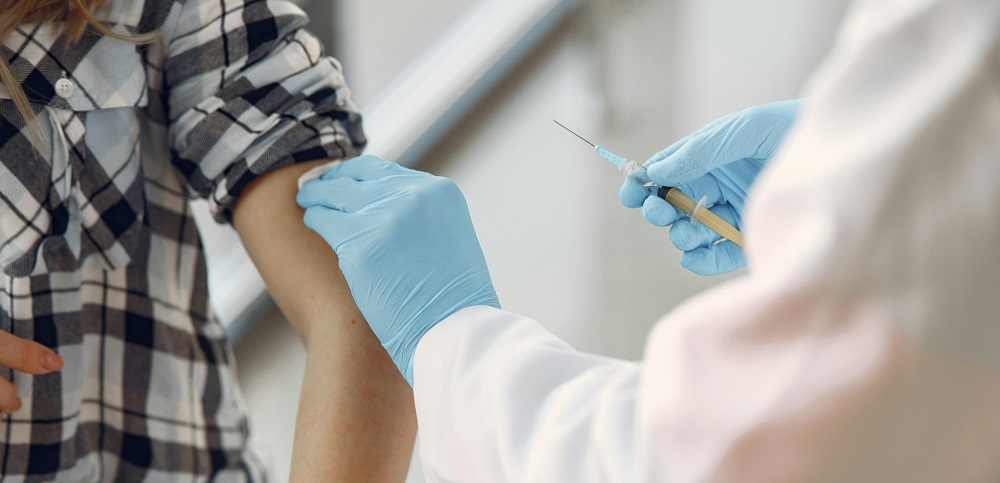
Vaccinations for Botswana are mostly about staying current rather than meeting entry rules. The one entry requirement is a yellow fever certificate, and it applies only if you're arriving from, or have recently travelled through, a country where yellow fever is present. If you're flying in directly from a country with no yellow fever risk, such as the UK or South Africa, you won't need it.
Beyond that, make sure your routine vaccinations are up to date before you move, and keep your MMR (measles, mumps and rubella), diphtheria-tetanus, polio and COVID-19 jabs current. Measles is on the rise again worldwide, so don't let your MMR lapse. If you're moving with young children, keep their childhood immunisations, including polio, on schedule.
On top of the routine ones, a travel doctor will usually suggest a few extra vaccines for Botswana:
- Hepatitis A is recommended for every traveller.
- Typhoid is advised for most, especially if you'll spend time in rural areas.
- Hepatitis B is worth having, particularly for a longer stay.
- Rabies is one to consider if you'll be around animals or heading well off the beaten track.
Tuberculosis is common in Botswana, although as a short-term visitor or office worker, you're at low risk, and there's no traveller vaccine routinely advised for it. Six to eight weeks before you leave, see a travel clinic or your doctor to work out exactly what you need.
Useful links
Emergency medical services in Botswana
In a medical emergency in Botswana, dial 997 for a public ambulance or 992 for a private MRI Bostwana ambulance. The public ambulance service is mainly available in the larger towns, including Gaborone, Francistown, Maun, and Kasane. The biggest private provider is MRI Botswana (Medical Rescue International), which runs ground and air ambulances.
Public ambulances aren't available across much of the country, and the best hospitals for serious cases are in Gaborone or over the border in South Africa, so many expats rely on a private service and keep its number handy. In the remote north, including the Okavango Delta and Chobe, air rescue outfits such as Okavango Air Rescue provide helicopter evacuation, since the nearest hospital reachable by road can be hours away.
Whichever you use, cross-border evacuation to South Africa is common for the most serious cases, and this is exactly what your medical insurance should cover.