

Accommodation in Peru is cheap by North American or Western European standards, and low rents are one of the country's real draws for newcomers. There's a wide gap between Lima and the rest of the country, though.
In the cities, and Lima most of all, most expats rent apartments. Out in smaller towns and rural areas, freestanding houses are easier to come by and more the norm.
Types of accommodation in Peru
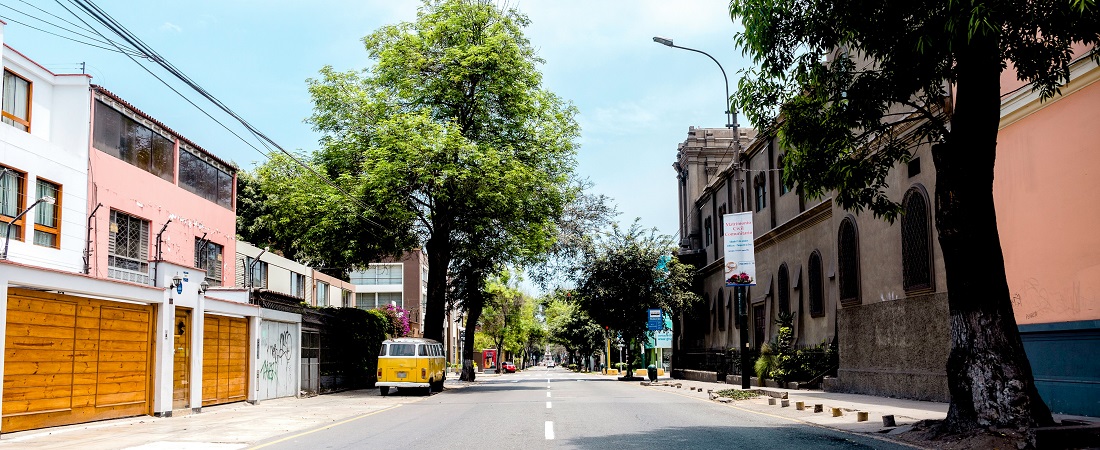
The main types of accommodation in Peru are apartments, freestanding houses, townhouses, and homes in gated complexes. Apartments (departamentos) are what most expats rent, and they are the mainstay of the market in every big city. Standalone houses are scarcer and more expensive in urban areas, so if you want extra space and a garden, expect to pay a premium for it.
The biggest factor in price is location. Central districts and the areas expats favour, in Lima, that means Miraflores, San Isidro, Barranco, and Surco, are the priciest, and you'll pay more for anything near the centre or a transport line. Newer residential complexes on the city fringes are often a good bet. They have up-to-date amenities and more room for your money in a quieter setting.
Security is worth weighing when you pick a place. Property crime is a real issue in Peruvian cities, and burglaries aren't rare, so it's worth choosing somewhere with round-the-clock security (a portería or vigilancia) and an alarm. Flats on higher floors tend to be safer than ground-floor units.
Furnished vs unfurnished
Apartments are let furnished, semi-furnished, or unfurnished, and unfurnished is the most common. A furnished flat should have the basics, furniture and white goods, whereas an unfurnished one often has no appliances at all, and sometimes not even light fittings.
Short lets
Short-term rentals are easy to find across Peru, especially in cities and tourist spots. Airbnb is the main platform, and Booking.com is another option for shorter stays. If you arrive on a short stay first, you can get a feel for different neighbourhoods before committing to a long-term lease. These places are usually fully furnished, and bills and internet are normally included in the price, which, for stays of any length, is usually cheaper than a hotel.
Useful links
Finding accommodation in Peru
When you're looking for accommodation in Peru, the best place to start is online, on the big property portals; they have listings nationwide in both soles and dollars. Expat groups on social media are worth a look too, especially for rooms and short lets you won't find on the big portals.
Estate agents in Peru are easy to find and genuinely useful for expats. A good agent will walk you through each step, and since many landlords speak little or no English, an agent or a Spanish-speaking friend is worth having at viewings. The owner usually pays the agent's commission (around one month's rent). If your employer has hired a relocation company, they'll do the legwork and shortlist places that fit your budget and preferences.
Useful links
Renting accommodation in Peru
Renting accommodation in Peru can feel unfamiliar at first, especially with the language barrier, so it's worth working with an estate agent who speaks both English and Spanish.

Making an application
When you apply, the landlord will usually ask for proof of legal residence, proof of income, a copy of your Carné de Extranjería (the ID card for foreign residents), and sometimes a credit check. Landlords are also required to confirm that foreign tenants are in the country legally, so it pays to have your residence papers in order.
Leases
There are two kinds of leases in Peru, fixed-term and indefinite-term. With a fixed-term lease, you and the landlord are both tied in for a set period, up to a maximum of 10 years, so read the terms closely before you sign. An indefinite-term lease is more flexible, since either side can end it with notice. That notice is normally a month, although you and the owner can agree on something different.
Deposits and fees
The landlord will likely ask for a security deposit of one or two months' rent when you sign, along with the first month up front. The deposit is there to cover any damage during the tenancy, so you'll get it back if you leave the place as you found it. If not, the landlord keeps enough to cover repairs.
Terminating the lease
You can end an indefinite-term lease with the agreed-upon notice period, which is usually a month. Leaving a fixed-term lease early is trickier, since if the contract has a penalty clause, you may forfeit part of your deposit or owe a set sum.
Utilities in Peru
Utilities in Peru, like water, electricity, gas, and internet, aren't always included in the rent, and some may be an extra cost on top. Before you sign, make sure the contract is clear on who pays for what, and ask for an inventory of the property's condition.

Electricity and gas
Nearly all urban areas of Peru have mains electricity, and a few remote rural communities are still off the grid; those households often cook over firewood and run generators for light. Peru's electricity distributors are regional monopolies, so you don't get to choose your provider, and whoever serves your district is who you sign up with. In Lima, Pluz Energía (formerly Enel) is the distributor for the northern districts and Callao, while Luz del Sur covers the south. To set up a supply, you'll need ID and proof of address, and you may have to leave a deposit.
Piped natural gas is only available in certain regions. Cálidda supplies Lima and Callao, Contugas supplies Ica, Quavii supplies the north (including Piura), and Petroperú supplies parts of the south. In homes that aren't connected, people cook with bottled LPG. You can buy the cylinders from local distributors and swap them when they run low.
Water
Tap water in Peru isn't safe to drink anywhere in the country, so residents stick to bottled water or boil what comes from the tap. Public utilities run the supply, SEDAPAL in Lima and regional providers elsewhere. Nationwide, only about half the population has access to safe drinking water, although Lima and other big cities are far better served than rural areas. You can set up a connection and pay your bills through your provider's website.
Bins and recycling
Rubbish collection in Peru is run by the municipalities, and the service is far better in some districts than others. In wealthier areas, it's regular and reliable; in poorer or outlying ones, it can be patchy, and illegal dumping is more common. Formal recycling is still limited. Informal waste pickers (recicladores) do most of it; they gather and sort recyclables to earn a living.
Internet
Internet in Peru is quick and cheap to set up in the cities, where fibre is now the norm and prices are low by Western standards. The main providers are Movistar, Claro, Bitel, and Entel, and fibre challengers like Win compete in Lima. Coverage is strong in urban areas and thinner in the countryside.