

Money and banking in Peru are fairly straightforward to handle, and the tax rules are clear enough once you know whether you count as a resident.
Peru's banking system is modern and well regulated, overseen by the country's financial watchdog, the Superintendence of Banking, Insurance and Pension Funds (SBS). The government privatised the banking sector in the 1990s, and expats now choose from a wide range of local and international banks.
Money in Peru
Money in Peru is denominated in the Sol (PEN), which is divided into 100 céntimos. Its symbol is S/.
- Notes: PEN 10, PEN 20, PEN 50, PEN 100 and PEN 200
- Coins: PEN 1, PEN 2 and PEN 5, plus 10 céntimos, 20 céntimos and 50 céntimos
The 1 and 5 céntimo coins have been withdrawn, so shops round cash totals to the nearest 10 céntimos.
US dollars are widely accepted in Peru, but the exchange rate you get for them is usually poor. For small, day-to-day purchases, you're better off with soles, since many little shops only deal in the local currency.
Banking in Peru
Banking in Peru is fairly painless once you're set up, and you've got plenty of choice. The market is led by four big banks: BCP, BBVA, Interbank, and Scotiabank. BCP is the largest and has the widest ATM network, which is handy once you head outside Lima.
Online and mobile banking are well established, so you can sort out most things without queuing at a branch. Fees are another matter. Many banks charge for individual transactions, so it pays to compare tariffs before you settle on one.
Counterfeit notes are a known headache, especially US dollars, so change money only at a bank or a licensed exchange house (casa de cambio).
Most branches are open from 9am to 6pm on weekdays and from 9am to 1pm on Saturdays. Branches inside shopping centres are sometimes open longer and at weekends.
Opening a bank account
Opening a bank account in Peru is straightforward for foreigners, and you can hold your money in soles or, at many banks, in US dollars. For a basic savings account, a passport or your home-country ID is usually enough. If you hold a Carné de Extranjería (the foreign resident ID card), you can open the full range of accounts, and the process is smoother. You'll normally need to show proof of a local address, and some banks ask for proof of income too.
ATMs and credit cards
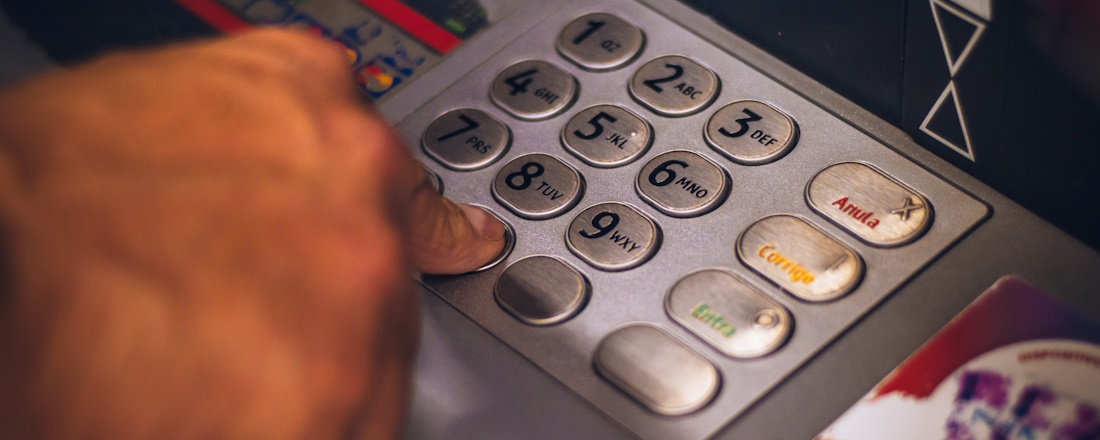
ATMs are easy to find across Peru, and there are more of them in the bigger cities and tourist hubs. Look inside bank branches and shopping centres, near the main square of most towns, and in some pharmacies and supermarkets. Foreign bank cards aren't always accepted, so check before you try to withdraw cash.
In the cities, you can pay by card in larger shops, supermarkets, restaurants, and hotels. Visa and Mastercard are the most widely accepted; American Express is taken mainly at high-end hotels and restaurants. Out in rural Peru, you'll mostly be paying in cash, since cards often aren't an option, so keep some soles on you.
Useful links
Taxes in Peru

Residents and non-residents are taxed differently in Peru. Residents pay tax on their worldwide income on a progressive scale of 8 to 30 percent, while non-residents pay a flat 30 percent on the income they earn here. You count as a tax resident once you've spent more than 183 days in the country within any 12-month period, and those days needn't be consecutive.
Your tax status is fixed at the start of each tax year, so if you cross the 183-day mark partway through, you only pay tax on your worldwide income from 1 January of the following year. Until then, Peru taxes you as a non-resident.
Beyond income tax, employees also pay into a pension fund (the state ONP or a private AFP), and this deduction is usually around 10 to 13 percent of your salary. Employers cover healthcare separately through the public insurance scheme, EsSalud.
Peru also has double taxation treaties with a number of countries, including the UK, although not the USA, so many expats can avoid being taxed twice on the same income. Expat tax can be complicated, so it pays to talk to a tax adviser who handles expat cases, ideally before you cross the residency line.