

- Download our Moving to the USA Guide (PDF)
The processes and rules for getting visas for the USA have become increasingly complex and can change completely at the blink of an eye. Whether you’re travelling to the US on holiday or making a more permanent move to take up a new job, you’ll need to understand the different types of visas for the USA and be prepared for sudden policy changes.
For example, the US border rules shifted again in January 2026. Entry is now fully suspended for nationals of 19 countries. A growing list of further countries has received partial bans. These rules impact tourist, student, and exchange visitor visas.
If you’re from one of more than 40 countries, including the UK, Ireland, Australia, New Zealand, Japan, South Korea, and most Western European countries, you may stay in the US for up to 90 days without a visa. You’ll still need ESTA (Electronic System for Travel Authorization) approval before departure. Canadian citizens are generally visa-exempt and do not need an ESTA.
Here are the main visa categories available for expats travelling to the USA.
Visitor and business visas for the USA

If you’re not eligible for the Visa Waiver Programme, you’ll require a visitor visa. This visa is designed for temporary stays by international visitors and allows entry for doing short-term business (a B-1 visa), visiting as a tourist (a B-2 visa), or a combination (B-1/B-2 visa). Note that if you enter under the Visa Waiver Programme, you cannot extend your stay or change to another visa status while in the US.
To show you don’t plan to overstay, you need proof that you have funds to cover your expenses, as well as proof of strong ties to your home country, such as employment verification, property ownership, family relationships, or business interests.
Useful links
Temporary work visas for the USA
There are several visa categories available if you want to work in the US, with each category being specific to a particular kind of work. Your prospective employer will need to sponsor your visa application in most cases.
Traditionally, the H-1B and L visas were the primary routes. However, due to the prohibitive H-1B fee introduced in 2025, many professionals now look to the O-1 visa for extraordinary ability or the E-2 visa for treaty investors. High-net-worth individuals can also now use the Gold Card Program. This pathway opened in December 2025. It offers residency to those who give USD 1 million to the Department of Commerce. Corporations can sponsor employees with a USD 2 million gift.
The H-1B visa applies if you’re taking up a position in a speciality occupation – in other words, workers with specific skills and knowledge who have completed higher education. A USD 100,000 application fee was introduced for new H-1B petitions, and although this has been contested in federal courts, most prospective expats are looking for alternatives.
Given these costs, Canadian and Mexican professionals should almost certainly explore TN status under the USMCA, which avoids both the cap and the surcharge.
The L visa (divided into L-1A or L-1B) is for employees of international companies who have been transferred to a branch in the US. L1-A is for executive and managerial employees, while L-1B is for employees with specialised knowledge.
See our comprehensive guide to Work Permits in the USA.
Useful links
- US Citizenship and Immigration Services: Temporary Workers
- US Department of State: Temporary Worker Visas
Permanent residence in the USA
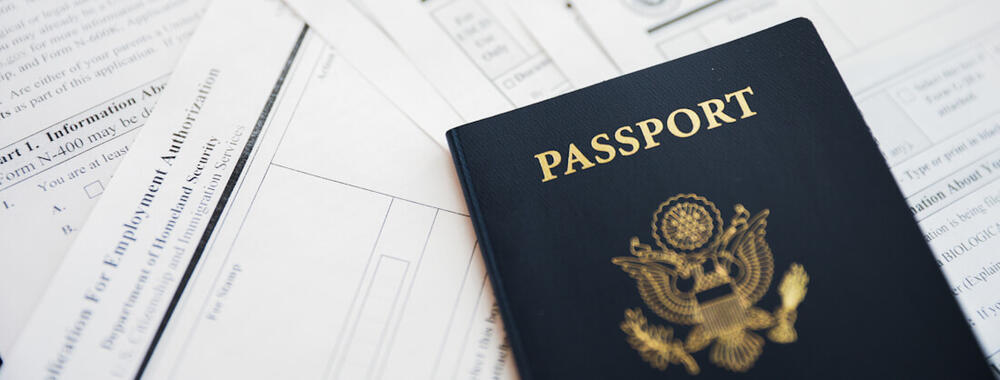
The Green Card is the official document issued by the US Citizenship and Immigration Services (USCIS) to foreign nationals, granting them permanent residency in America. This allows you to live and work anywhere in the United States without restrictions.
Employment-based Green Cards
To stay permanently in the US for work purposes, you’ll need to acquire a Permanent Resident Card through one of the employment-based categories. Expats moving to the US permanently for work or investment purposes will fall into one of the following tiers:
- Employment First Preference (EB-1): Priority workers such as executives, managers, and persons of exceptional ability
- Employment Second Preference (EB-2): Professionals holding advanced degrees and persons of exceptional ability
- Employment Third Preference (EB-3): Skilled workers, professionals, and other workers
- Employment Fourth Preference (EB-4): Certain special immigrants
- Employment Fifth Preference (EB-5): Foreign investors
The application process
The employment-based Green Card process generally involves three stages:
- Obtain PERM labour certification (typically 18 to 24 months for EB-2 and EB-3 categories),
- File an I-140 immigrant petition with your employer’s sponsorship,
- Submit your I-485 permanent residence application once your priority date becomes current.
You’ll need a US employer to petition for and sponsor you. The employer must file the relevant forms to confirm their sponsorship, and if the petition is approved, you can proceed with your permanent residence application.
You can maintain non-immigrant visa status (such as H-1B or L-1) while your Green Card application is being processed, or alternatively, wait in your home country until final approval. The entire process typically takes two to four years for most nationalities, although applicants from India and China face substantially longer waits – potentially decades for EB-2 and EB-3 categories due to per-country visa caps.
Other pathways to permanent residence
Beyond employment-based categories, Green Cards can also be obtained through immediate family members who are US citizens or legal permanent residents. The status of children born to guest workers is currently a matter for the Supreme Court. The justices are reviewing Trump v. Barbara to decide if birthright citizenship applies to the children of temporary visa holders. A ruling is expected by July 2026. This page focuses on employment and work-related pathways.
Renewing your Green Card
You can renew your expiring or expired Green Card by filing Form I-90 (Application to Replace Permanent Resident Card). Upon filing, you’ll receive an updated receipt notice. This notice, alongside your expired Green Card, serves as valid proof of your continued status and employment authorisation in the United States while you await your new card.
If you’ve lost your Green Card and require evidence of your lawful permanent resident status, you can schedule an appointment at a USCIS Field Office by contacting the USCIS Contact Center. After filing Form I-90, you can request an ADIT stamp, which provides temporary proof of your status.
Read more about Work Permits in the USA
Useful links
- US Citizenship and Immigration Services: Green Card
- US Citizenship and Immigration Services: Permanent Workers
- US Department of State: Employment-Based Immigrant Visas
Visa regulations are subject to change at short notice, and you should contact your respective embassy or consulate for the latest details.