
The weather in Botswana is hot and dry for most of the year. Roughly 70 percent of the country is the Kalahari Desert, so the climate is semi-arid and rain is scarce almost everywhere. When it does rain, the showers are erratic and highly localised. One spot can be drenched while the ground 10 miles (16 km) away stays bone dry. Most of the year's rain falls in summer, between November and April.
Rainfall is heaviest in the north and east, and far scarcer in the southwest. Around Chobe in the far northeast, it can be more than double that of the parched Kgalagadi district in the far southwest. Wherever you are, the wettest months are usually January and February.
Summer in Botswana is sweltering. Across much of the country, daytime highs reach 100°F (38°C), and in the Kalahari, readings soar above 110°F (44°C) on the hottest days. The heat is dry, briefly punctuated by afternoon storms.
Winter, from May to August, is almost completely dry. The days are warm and sunny, around 73°F (23°C). The nights are a different story. There is barely any cloud cover to trap the day's heat, and it's sucked out of the air after dark. In Gaborone, overnight lows in winter often fall below 42°F (6°C). In the southwest and the open Kalahari, they drop further still to freezing point, and frost is common.
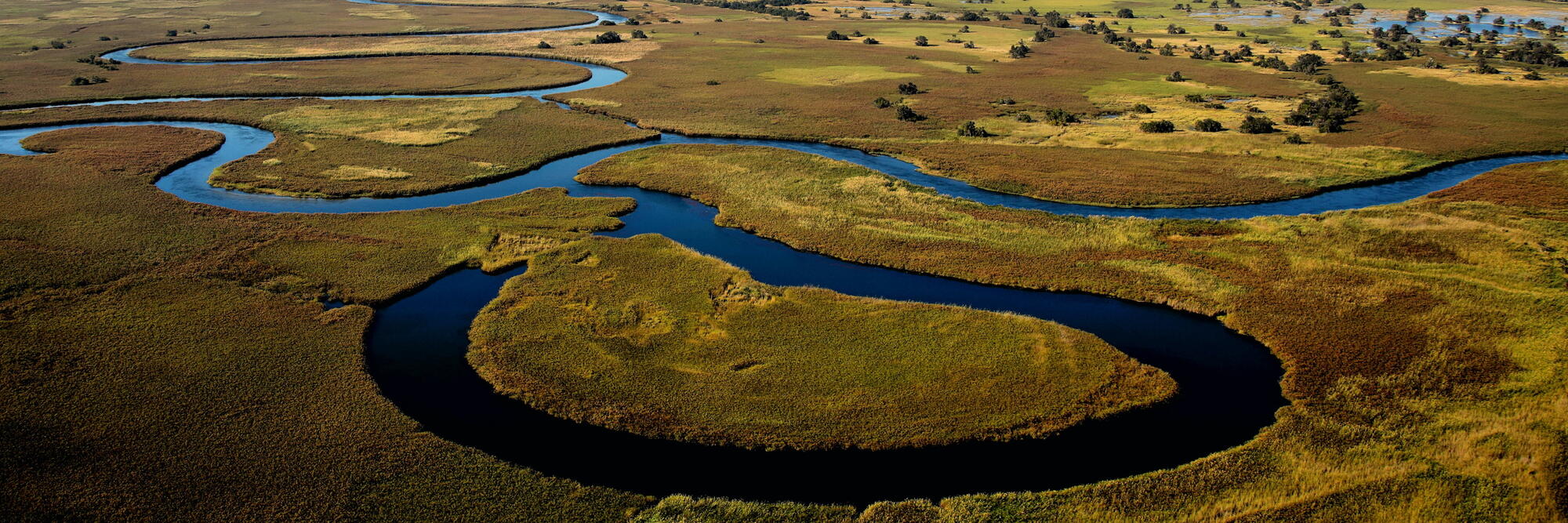
The far north is a different case, and nowhere more so than the Okavango Delta. Its floodwaters don't come from local rain; they begin as rain in the Angolan highlands, hundreds of miles upstream, and reach Botswana months later. The Delta is therefore at its fullest between June and August, deep in the dry winter, just when the rest of the country is at its most parched. That's why its wetlands are lush and green while the Kalahari to the south is brown and dusty.
The two shoulder seasons are not alike. Autumn, from March to May, is the pleasant one. The rains ease off and the days grow cooler, but the biting nights of winter are still to come. Spring is another thing entirely. Hot, dusty winds blow off the Kalahari from late August, and by October, the hottest part of the year, you'll be longing for the first storms to break.