
Healthcare in Peru is inconsistent, and rural areas in particular have only a handful of well-equipped facilities. The country has both public and private facilities, but most expats rely on the private system, as the public hospitals are widely seen as overstretched and short-staffed.
Public healthcare in Peru
Public healthcare in Peru is stretched thin, largely because the system is seriously underfunded. Government-funded hospitals have long waiting times, and patients with non-urgent concerns often wait months for an appointment.
Rural areas have far fewer options. The clinics there are small and under-resourced, and their staff rarely speaks English. Anyone with a serious emergency may need to be evacuated to a city with better-equipped hospitals.
Private healthcare in Peru

Private healthcare in Peru is concentrated in Lima, where the best clinics meet international standards, and many doctors speak English. Other cities, such as Arequipa and Cusco, have private options too, although these are more limited. These clinics are better staffed and equipped than the public hospitals, and they are the first choice for most expats.
Private care is relatively affordable by Western standards, but doctors often expect payment up front, regardless of your insurance arrangement. Check how payment works before your appointment.
Health insurance in Peru
Health insurance in Peru comes in two public forms for the country's nationals: Seguro Integral de Salud (SIS) and EsSalud. The Ministry of Health runs SIS, which mainly covers low-income Peruvians and others without insurance. EsSalud covers formally employed workers and their families, who use its own network of hospitals and clinics.
For easy access to private care, you should take out private health insurance. If your move to Peru is part of a corporate relocation package, factor the cost of cover into your contract negotiations.
Useful links
Pharmacies and medication in Peru

Pharmacies in Peru go by two names, botica and farmacia, and you will find one on almost every block in the cities. Look for a green cross on a white background, the symbol used in much of the world. Many are open around the clock, and larger supermarket chains such as Plaza Vea and Metro also have in-store pharmacies. Plenty of medicines are sold over the counter, although for some you will still need a local prescription.
The big chains in cities such as Lima also run delivery services around the clock. You can order by phone or through their apps and have a courier bring it to your door.
Health hazards in Peru
Health hazards in Peru are largely a matter of geography. In the highlands, the main risk is altitude sickness, which locals call soroche. Many new arrivals feel it in places such as Cusco, Puno, Huaraz, and the Colca Canyon. Symptoms include headache, nausea, lethargy, and dizziness. Most visitors improve with rest and time to acclimatise, and locals swear by coca tea; see a doctor if symptoms persist or worsen.
Malaria is a risk in the jungle areas east of the Andes, mainly the Amazon lowlands below about 8,200 feet (2,500 m). If you are heading there, take antimalarial precautions and protect yourself against bites.
Dengue fever is a growing concern in Peru, and outbreaks have become larger and more frequent in recent years. The Aedes mosquito that carries it is active in the lowlands and along the northern coast, and there are cases in Lima in the worst seasons. High-altitude destinations such as Cusco, the Sacred Valley, Machu Picchu, and Lake Titicaca are largely free of dengue. There is no specific treatment, so avoiding bites is your best protection.
Stomach upsets from contaminated food or water are common, even in the cities. Stick to bottled or boiled water, and be cautious with street food and raw produce until your system adjusts.
Vaccinations in Peru
No vaccinations are required to enter Peru, unless you arrive from a country where yellow fever is a risk, when you may need to show proof. You should still have several jabs before you move. The US Centers for Disease Control and Prevention (CDC) recommends hepatitis A and typhoid for most travellers to Peru, as both are spread through contaminated food and water. If you plan a long stay or time in remote areas, ask your doctor about hepatitis B and rabies as well.
If you are heading into the Amazon, the yellow fever vaccine is strongly recommended for jungle regions below around 7,500 feet (2,300 m), such as Loreto, Madre de Dios, Ucayali, and San Martín. Have it at least 10 days before you travel, since that is how long it takes to work.
You should also keep your routine vaccinations up to date. Measles has resurfaced in parts of South America, so check that your MMR cover is up to date. Routine vaccinations to stay on top of include:
- MMR (measles, mumps, and rubella)
- Tetanus and diphtheria (Tdap)
- Polio
- Chickenpox
- Seasonal influenza
- Covid-19
Emergency medical services in Peru
Emergency medical services in Peru are patchy outside the main cities. In Lima and other large cities, you can call the public ambulance line, SAMU, free on 106; EsSalud members in Lima and Callao can also use 117. Response times can be slow, so many expats go straight to a private clinic, several of which run their own ambulances. For a general emergency, you can also dial 105 for the police, or 911 in Lima and Callao.
In remote areas and anywhere with limited facilities, anyone with a serious condition may need evacuation to Lima or abroad. Make sure your health insurance covers medical evacuation, and keep your insurer's emergency numbers to hand, as many provide a list of nearby hospitals.
Hospitals in Lima
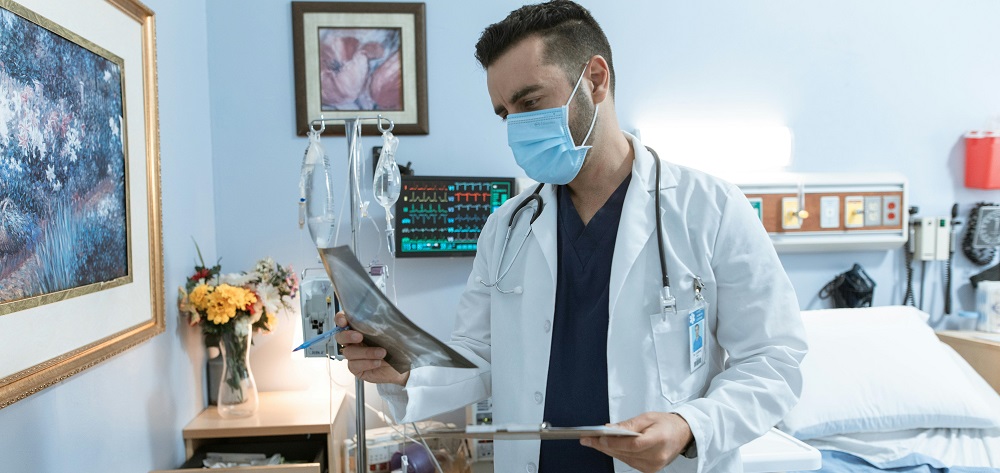
The hospitals in Lima are the best-equipped in the country, and the private clinics below are popular with the expat community.
Clinica Anglo Americana
Website: www.clinicaangloamericana.pe
Address: Calle Alfredo Salazar 350, San Isidro 15073
Clinica San Borja
Website: www.sanna.pe
Address: Av. Guardia Civil 337, San Borja 15036
Clinica Ricardo Palma
Website: www.crp.com.pe
Address: Av. Javier Prado Este 1066, San Isidro 15036