

Families moving to Peru with children have a decent spread of schooling options, from free public schools through to fee-paying private and international ones. Peru's public system is free, and the country has been one of Latin America's fastest improvers on international tests. It's still underfunded, though, and its students score below regional leaders such as Chile.
Most expat parents go private or international, mainly to get around the language barrier and to keep their children on a globally recognised curriculum.
Public schools in Peru
Peruvian children can attend public school for free, and schooling is compulsory from the last year of preschool, at age 5 through to 16. Funding is tight and class sizes tend to be large, and the gap between well-off urban schools and poorer rural ones is wide.
Lessons are in Spanish and based on the national curriculum. For most expat children, that language barrier is the first hurdle in the state system. In parts of the Andes and the Amazon, lessons are sometimes given in an indigenous language such as Quechua or Aymara.
Basic education is organised into three stages:
- early years or pre-school (inicial), ages 3 to 5
- primary (primaria), ages 6 to 11
- secondary (secundaria), ages 12 to 16
In the upper years of secondary school, students pick either an academic track or a more technical, vocational one. After that, they can go on to a university or a technical institute; most institutes are private but overseen by the Ministry of Education.
The school week is Monday to Friday, and the school day is usually about 8am to 2pm, although students at full-day secondary schools finish later. The Peruvian school year is from March to December, and the year is typically split into four terms.
Useful links
Private schools in Peru
You'll find private schools right across Peru's cities, and they're especially thick on the ground in Lima. There is everything from modest neighbourhood colegios to well-resourced bilingual schools, so fees and standards are all over the map.
Many teach the Peruvian curriculum in Spanish. A good number also run bilingual Spanish and English programmes, which are a gentler landing for children who arrive with no Spanish. Some are run by religious orders; others are overseen by a private board and funded through fees.
Before you commit anywhere, you can look up a school's official registration on Identicole, the Ministry of Education's public school register.
International schools in Peru
For most expat families, international schools in Peru are the obvious choice. Teaching is mostly in English, so children sidestep the language barrier, and because many follow a globally recognised curriculum such as the IB, children can slot straight into a school elsewhere if the family moves on again. These schools are better funded than state ones, so the facilities and extras are a step up.
Peru has one of the deepest international school sectors in Latin America. Around 90 of its schools are authorised IB World Schools, and others follow British (and Cambridge), American, French, German, or Italian programmes. By law, all of them teach the Peruvian curriculum alongside their own, and most are bilingual in Spanish and English. Most are in Lima, especially in the Santiago de Surco and La Molina districts, and there are others in Arequipa and a handful of other cities.
Fees are higher than at local private schools, and the most sought-after schools are hard to get into. At the top Lima schools, waiting lists are long, and families often apply up to a year ahead.
Useful links
Special educational needs in Peru
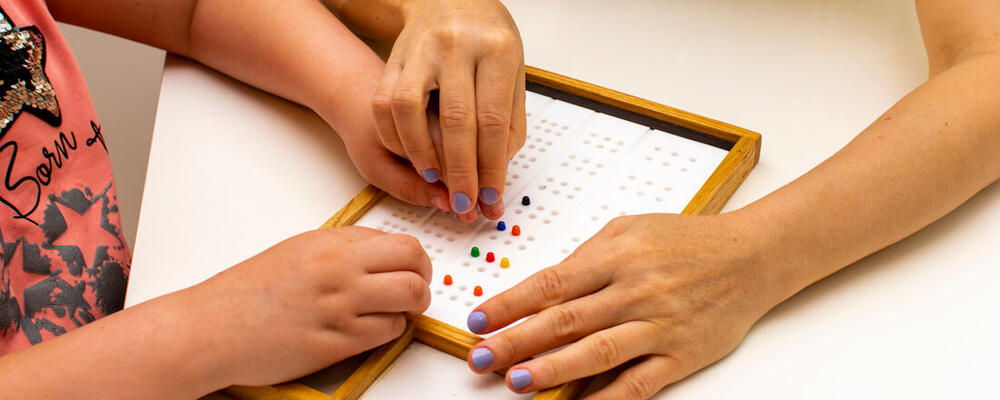
Support for special educational needs in Peru is patchy, and it's thinnest in rural areas where teachers are already stretched. On paper, the system is inclusive. Mainstream public schools are meant to enrol children with disabilities and keep places open for them. Roving support teams, the SAANEE, are there to help them.
Children with more severe or multiple disabilities are taught at separate special schools, the CEBE, and there's an early intervention programme (PRITE) for the under-threes.
In practice, resources are tight, and many families look beyond the state sector. Private and international schools tend to have far more to offer, and specialist centres such as the Centro Ann Sullivan del Perú work with children who have developmental disabilities. Contact any school or centre directly to find out exactly what support they can give.
Useful links
Tutors in Peru
A private tutor can help an expat child settle into a new school system, catch up after a mid-year move, get to grips with a tricky subject, or pick up Spanish faster. One-to-one attention is often exactly what a child needs to find their feet. Dedicated tutoring firms are fairly thin on the ground in Peru, so most families arrange lessons through online marketplaces where you can filter by subject, level, price, and whether you want lessons in person or online.