
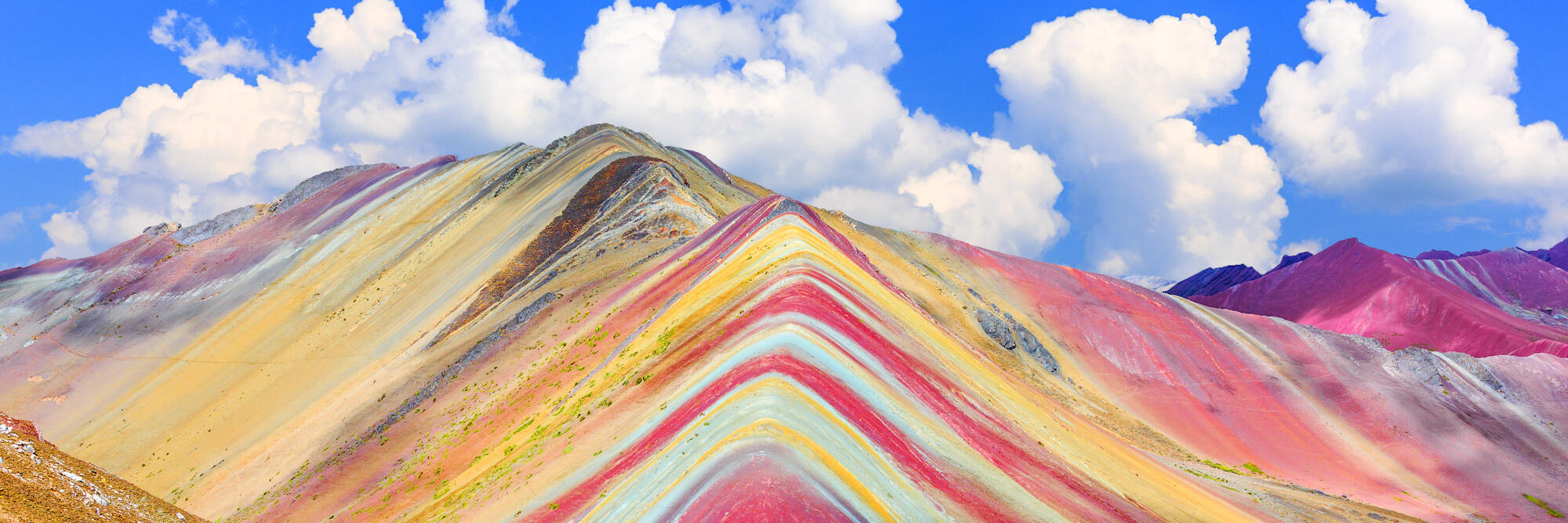
The weather in Peru comes down to which region you live in, as the country's terrain is so diverse. The main reason is altitude. On any given day, the high Andes can be below freezing at night while the coast is mild and the jungle hot and humid. Peru has three climate zones: the coastal region (La Costa), the Andean region (La Sierra), and the Amazon rainforest (La Selva).
The Pacific coast is a desert and gets very little rain, and the Humboldt Current that flows just offshore cools the air and keeps the coast dry for much of the year. Lima, the capital, is right on this coastal strip and gets almost no rain. What it does get is endless grey. From about May to November, a thick blanket of sea fog called the garúa settles over the city, and the locals call the dull, low sky the panza de burro, or donkey's belly. Lima's warm season is December to April, when temperatures average 66°F to 81°F (19°C to 27°C). Winter (June to October) temperatures in the city often drop to 59°F (15°C).
The Andes and the Amazon are a different story. Both get heavy rain, and it peaks between January and March. Their drier stretch is roughly June to September.
If you're moving to Lima or the coast, light clothing will be enough for summer, but pack a jacket for the greyer, cooler winter. Warm layers are essential in the highlands, where the nights turn cold regardless of the season. Waterproofs are worth having for the jungle, and for the wet season up in the mountains.