
- Download our Moving to Egypt Guide (PDF)
Banking, money, and taxes in Egypt can be a source of frustration for expats. While there are plenty of Egyptian banks available, expats often prefer to open accounts with larger banks that offer English-language services, online banking, foreign currency accounts, and wide ATM networks.
Dealing with the bureaucracy at Egyptian banks is difficult, and fees and charges can feel high or unpredictable compared with what many expats are used to. To make matters worse, banking hours in Egypt are limited. Most branches close by mid-afternoon, although some now operate until 5pm under extended hours guidelines introduced by the Central Bank of Egypt.
Money in Egypt
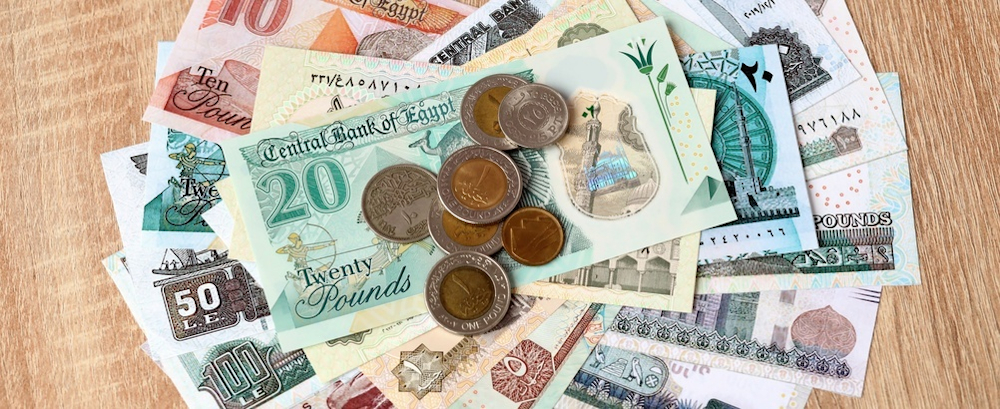
The currency used in Egypt is the Egyptian Pound (EGP). It is divided into 100 piastres.
- Notes: EGP 1, EGP 5, EGP 10, EGP 20, EGP 50, EGP 100, and EGP 200
- Coins: EGP 1, 25pt, and 50pt
Banking in Egypt
Banking in Egypt has a mixed reputation among expats, who frequently report complex fee structures and unfavourable exchange rates. Several international and large local banks operate in the country. CIB (Commercial International Bank), QNB Alahli, and HSBC Egypt are among the most prominent.
An existing relationship with the same brand in your home country does not guarantee a smooth process locally; you will still need to satisfy Egyptian documentation and residency requirements. Many employers pay salaries directly into a designated local bank account. New hires are often asked to open an account with the employer’s preferred bank, which simplifies the process but limits choice.
Opening a bank account
Opening a bank account in Egypt can be bureaucratic, and requirements are very different between banks and even between different branches of the same bank.
Expats will likely need at least their passport, residence permit, an initial cash deposit, and proof of income. Many banks will require proof of employment and proof of address, such as a utility bill. Staff at larger banks in major cities often speak some English, but it is still useful to have key terms in Arabic or a local contact to help if needed.
ATMs and credit cards
ATMs are plentiful in major cities and tourist destinations, but less common in smaller towns and rural areas. Cash is still king outside the major cities, so keep some local cash on hand.
Hotels, chain restaurants, larger shops, and major attractions in Egyptian cities generally accept international credit and debit cards, but cash is still needed for smaller or local businesses. When paying by card, always choose to be charged in Egyptian Pounds rather than your home currency to avoid unfavourable currency conversion.
Useful links
Taxes in Egypt
Taxes in Egypt can be complex for expats, although there is some relief that a wide range of countries have double tax treaties with Egypt. Expats are liable for income tax in Egypt, and they may also pay tax on their worldwide income, depending on whether they are classified as tax residents.
An expat is generally considered a resident for tax purposes if they spend more than 183 days in Egypt during any 12-month period (whether continuously or not) or maintain a permanent home in the country. Tax residents pay tax on both their local and worldwide income.
Income earned in Egypt is taxed at progressive rates from 0 to 27.5 percent. Social insurance contributions are also deducted from salaries.
Cross-border tax obligations can be difficult to untangle, so many expats choose to consult a qualified tax professional who specialises in international filings.