
- Download our Moving to Egypt Guide (PDF)
Local culture in Egypt can catch newcomers off guard. Life in the Gift of the Nile is quite different from that in the West, and expats may take some time to adapt to the local way of life.
People are brusque one minute and incredibly helpful the next, many shops expect patrons to barter (the asking price being at least double the going rate), and power cuts are part of everyday life. Egypt can be frustrating, but its friendly people and fascinating culture more than compensate for these challenges.
Language and communication in Egypt
Language and communication in Egypt can be a steep learning curve. Arabic is among the hardest languages to learn in the world; the US Foreign Service Institute places it in its most difficult category. Arabic has many dialects, and Egyptian is just one of them. Many phrasebooks, dictionaries and even Google Translate do not differentiate between dialects. Westerners find learning numbers and speaking a few basic phrases straightforward, though, and getting the gist of conversations by picking up a few keywords will come with time.
English is commonly spoken to various degrees among Egyptians in business or tourism, especially in the cities. That said, communication isn’t always straightforward. Egyptians tend to value social harmony and communicate in a high-context way, so a local may respond ‘yes’ when they really mean ‘possibly’ or ‘I’m not sure’ to avoid derailing the conversation or coming across as unaccommodating or impolite.
This can be frustrating for expats from low-context cultures where direct communication is the norm. When something is important, it can help to involve a trusted bilingual friend or colleague as a translator or to ask for confirmation in writing. What may feel like abruptness or curtness from an Egyptian speaker is usually not meant as rudeness; in many cases, they are trying to be helpful, and the brusque tone comes from limited English or from dealing with competing communication styles.
Women in Egypt
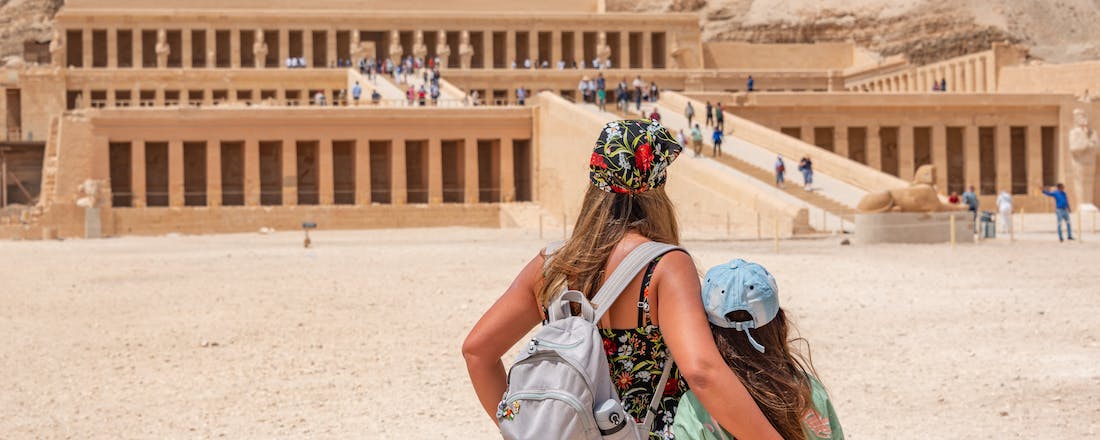
Life for women in Egypt comes with specific challenges. Verbal harassment, like lewd or suggestive comments, is sometimes directed at foreign women. Sexual assault is rare but does happen. The risk is lower in areas where expat women are more frequently seen and can blend in.
The Egyptian government has taken legislative steps to address sexual harassment. Law 185 was ratified by the president in 2023, and it significantly increases penalties for sexual harassment to a minimum of two years’ imprisonment. But enforcement is inconsistent, and it may take time before real change is felt on the street.
When out and about, try to avoid direct eye contact, keep conversations businesslike, and make it clear that physical contact is unwelcome. It helps to walk with another woman, chat about your husband and several children (real or not), wear a wedding ring, and refuse offers of food and drink from strangers.
Egyptians are friendly, and in a tricky situation, expat women can turn to passersby (especially women) for help. She will invariably be happy to assist. If you’re with a man, it's helpful to refer to him as your husband rather than calling him a boyfriend or partner. More conservative dress can help reduce problems, but even traditionally dressed Egyptian women are hassled. The Cairo metro reserves two carriages per train for women; one is women-only at all times, and the second becomes mixed-use after 9pm.
Meeting and greeting in Egypt
Meeting and greeting in Egypt follows its own etiquette. A handshake is common between men. When introduced to a group, it’s customary to shake the hands of everyone present. Handshakes tend to be limp and prolonged and should include eye contact and a smile.
Family members and men who know each other well will kiss, touching cheek to cheek a few times. Advice varies for women meeting men for the first time. Some consider it correct for the woman to initiate the handshake; others feel this is too forward. A foreigner will have more leeway in this than Egyptian women. Courtesy, respect and a sense of humour will paper over any etiquette faux pas.
Religion in Egypt

Religion in Egypt is central to daily life. The vast majority of the population is Sunni Muslim. A small percentage of the population is Christian, most of them Coptic Orthodox.
If you find someone at prayer, it is polite to allow them to finish; this usually takes only a few minutes. The Muslim holy day is Friday. Business hours may be reduced, or shops may close entirely. For Christians, the day of rest is Sunday. Between the two, it can be tricky to predict which day a given business will close, so it pays to check hours in advance.
During Ramadan, Muslims fast from dawn to sunset. Expats are not expected to fast, but it's considered disrespectful to consume food, drink, tobacco, and gum in public during the day. Business hours also look quite different during the month. Many offices have shorter hours, and daily life becomes more oriented around evening activities. Restaurants and hotels in expat-frequented areas typically remain open and serve meals throughout the day.
LGBTQ+ in Egypt
LGBTQ+ rights in Egypt are a serious concern for expats and travellers. Same-sex relationships are not explicitly criminalised in the penal code, but authorities routinely use vaguely worded laws around ‘debauchery’ and public morality to arrest and prosecute LGBTQ+ people.
Egyptian police have been known to use dating apps to entrap people, and officers may inspect your phone and social media at checkpoints or during arrests. Exercise caution with dating apps and phone data.
Beyond the aggressive prosecution of LGBTQ+ people, Egyptian law also offers no protection for LGBTQ+ individuals, and same-sex partnerships have no legal recognition. There is no legal pathway for gender transition.
That said, LGBTQ+ expats who maintain a low profile and avoid public displays of affection or LGBTQ+ symbols generally can go about their lives. There is a discreet LGBTQ+ community in Cairo, but getting integrated into organised queer spaces in Egypt also carries a higher risk.