3100 BCE: Ancient Egypt, one of the world’s oldest civilisations, emerges along the banks of the Nile River.
3100–2686 BCE: The Early Dynastic Period witnesses the unification of Upper and Lower Egypt under the pharaoh Narmer.
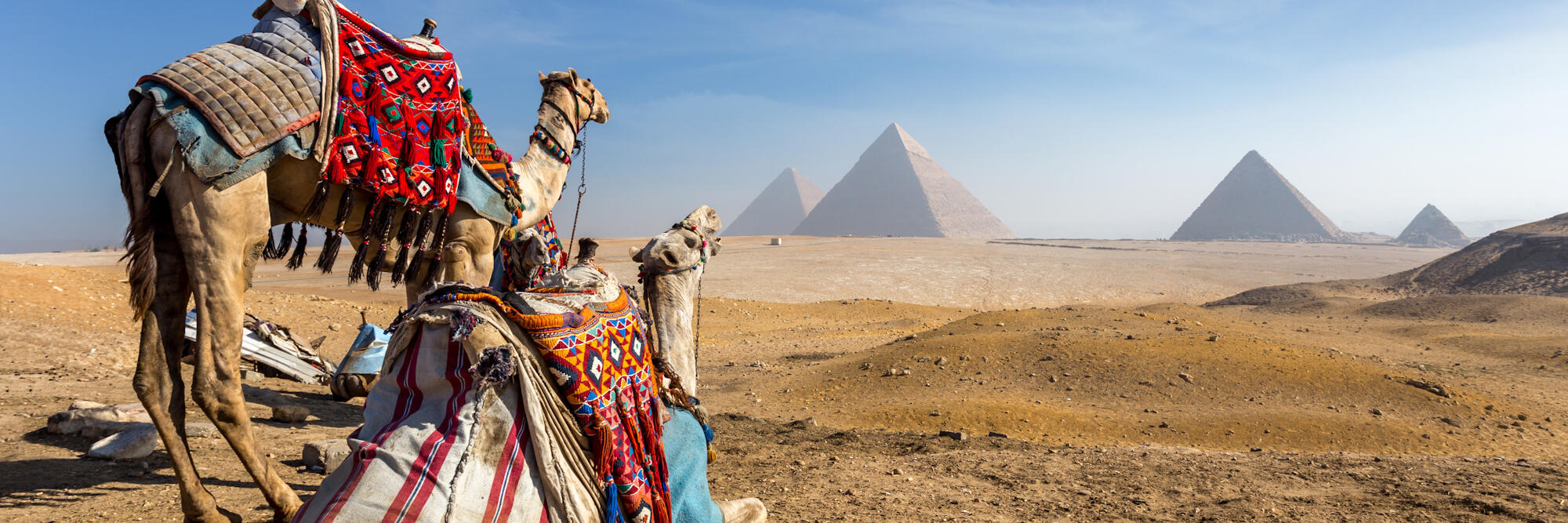
2686–2181 BCE: The Old Kingdom sees the construction of monumental pyramids at Giza, such as the Great Pyramid of Khufu. Pharaoh Djoser’s reign introduces the first step pyramid at Saqqara and signals a new direction in architectural style.
2040–1782 BCE: The Middle Kingdom brings stability and the development of art, literature, and trade.
1550–1458 BCE: Pharaoh Hatshepsut, the first woman to rule Egypt with the full, unqualified title and regalia of a male king, reigns during the New Kingdom’s 18th Dynasty and significantly expands Egypt's trade networks and international influence.
1353–1336 BCE: Pharaoh Akhenaten attempts to centre Egyptian worship exclusively on the sun god Aten during his reign.
1332–1323 BCE: Pharaoh Tutankhamun ascends to the throne and then dies at a young age. He is best known for the discovery of his treasure-filled tomb.
1279–1213 BCE: Ramses II, also known as Ramses the Great, reigns for an estimated 66 years during the 19th Dynasty and leaves a significant architectural legacy.
1200–1150 BCE: The Late Bronze Age collapse brings instability and incursions from the Sea Peoples and Libyans. Over the following centuries, Egypt faced successive waves of foreign domination by Kushites, Assyrians, Persians, and Greeks.
Ptolemaic and Roman Period
305–30 BCE: Egyptian and Hellenistic cultures merge during the Ptolemaic era under the rule of the Ptolemaic Dynasty.
51–30 BCE: Cleopatra VII, the last pharaoh of Egypt, forms alliances with Julius Caesar and Mark Antony in her struggle for power.
30 BCE: Egypt falls under Roman rule after Cleopatra’s death by suicide. The Roman period begins.
30 BCE–641 CE: Christianity spreads in Egypt during the Roman and Byzantine eras, and the country becomes an important centre for early Christian thought.
Early Islamic Period
641 CE: Muslim Arabs conquer Egypt and introduce Islam. Christianity declines gradually over the following centuries, although the Coptic community persists to this day. Arabic becomes the dominant administrative and cultural language, and the arts and sciences flourish under Islamic rule.
969–1171 CE: The Fatimid Caliphate establishes Cairo as its capital and constructs iconic landmarks such as Al-Azhar Mosque. Cairo becomes a centre for Islamic learning and culture.
1174 CE: Salah al-Din (Saladin) becomes the first Ayyubid Sultan of Egypt and recaptures Jerusalem from the Crusaders in 1187.
1250–1517 CE: The Mamluks, a Turkic slave caste, rule Egypt and defend the region against Mongol invasions.
Ottoman Rule and Modernisation
1517: The Ottoman Empire gains control of Egypt and rules it for over 400 years. The Ottoman administrative system is established in Egypt, including the appointment of a governor (Pasha) and the division of the country into provinces.
17th Century: The Mamluk Beys emerge as power brokers who effectively share power with the Ottoman governor. A unique dual administration system develops in Egypt.
1769–1773: Ali Bey al-Kabir rebels against the Ottoman Empire in an early assertion of Egyptian autonomy.
1798: Napoleon Bonaparte invades Egypt. The campaign sparks European interest in Egyptology and deepens France’s involvement in the region.
1798–1801: The French occupation under Napoleon ends when Ottoman and British forces expel the French. This event reshapes Egypt’s political and social order and opens a period of closer interaction with European powers.
1805–1848: Muhammad Ali Pasha, recognised as the founder of modern Egypt, rules during this period. His military, administrative, and social reforms lay the groundwork for the country’s modernisation, including a modern army and bureaucracy.
1839–1841: The Oriental Crisis sees Muhammad Ali Pasha’s expansionist policies challenge the Ottoman Empire. European intervention follows, and Ottoman rule over Egypt is consolidated, albeit with significant autonomy for Muhammad Ali and his successors.
1869: The completion of the Suez Canal greatly increases Egypt’s geopolitical and economic importance.
British Occupation and Nationalism
1863–1879: Khedive Ismail rules Egypt. His ambitious modernisation projects transform Cairo, but his spending plunges the country into a national debt crisis.
1875: Egypt’s financial crisis reaches a critical point, and Ismail is forced to sell Egypt’s shares in the Suez Canal to the British government.
1879: The Ottoman Sultan, under pressure from European creditors, deposes Khedive Ismail and appoints his son Tewfik Pasha. This intensifies European oversight of Egypt’s finances.
1881–1882: Colonel Ahmed Urabi leads the Urabi Revolt, a nationalist uprising against Khedive Tewfik and European influence. The revolt is a significant precursor to the British occupation.
1882: British occupation begins. Although Egypt nominally remains part of the Ottoman Empire, the British effectively control the country’s administration, military, finances, and foreign affairs.
1919: The British occupation sparks resistance movements and nationalist sentiments among Egyptians. These grow stronger over time and eventually lead to the Egyptian Revolution.
1882–1922: During British control, Egypt witnesses the growth of a national press, the formation of political organisations, and the emergence of intellectuals and nationalist leaders who lay the foundations for future struggles for independence.
1914–1918: During World War I, Egypt is a British protectorate. Egyptian labour and soldiers contribute to the war effort.
1919–1922: The 1919 Revolution, led by Saad Zaghloul and the Wafd Party, demands independence from British rule. The movement results in the recognition of Egypt’s nominal independence in 1922, but British military presence and influence continue.
Modern Egypt
1922: Egypt gains nominal independence, but British influence remains significant.
1922–1936: King Fuad I becomes Egypt’s first monarch following independence and rules until 1936. There is a struggle for full sovereignty and constitutional governance, marked by the tension between the Wafd Party, the monarchy, and the British.
1936: King Farouk succeeds Fuad I and faces increasing political corruption and social unrest during his reign.
1939–1945: World War II brings significant changes to Egypt, as it serves as an important Allied base and witnesses clashes with Axis forces in North Africa.
1952: The Egyptian Revolution takes place, led by a group of military officers known as the Free Officers Movement. They overthrow King Farouk and establish a republic.
1956: The charismatic Gamal Abdel Nasser emerges as a prominent leader and becomes Egypt’s second president.
1956–1970: Nasser’s leadership promotes social reforms, land redistribution, industrialisation, and the construction of the Aswan High Dam. Nasser co-founds the Non-Aligned Movement and seeks to unite Arab nations against Israeli aggression. Nasser also nationalises the Suez Canal, which leads to the Suez Crisis and military intervention by Britain, France, and Israel.
1970: Nasser’s sudden death results in Anwar Sadat assuming the presidency. Sadat pursues a policy of economic liberalisation, known as the Infitah, which aims to attract foreign investment and open up the economy. Sadat’s succession also marks a Cold War realignment, as Egypt shifts from a pro-Soviet to a pro-American stance.
1973: Egypt launches a surprise attack on Israel in what becomes known as the Yom Kippur War. Initial Egyptian military success sets the stage for peace negotiations.
1977: Sadat makes a historic visit to Israel and signs the Camp David Accords in 1978. The subsequent Egypt-Israel Peace Treaty of 1979 makes Egypt the first Arab state to establish peace with Israel and secures the phased return of the Sinai Peninsula.
1981: Sadat’s efforts for peace are met with widespread unrest, and Islamist extremists assassinate him during a military parade.
1981–2011: Hosni Mubarak assumes the presidency and governs Egypt for nearly three decades. He pursues economic reforms but faces criticism for his authoritarian rule and human rights abuses.
2011: The Egyptian Revolution erupts, driven by widespread discontent, demands for democracy, and opposition to Mubarak’s regime. The revolution leads to Mubarak’s ousting and is a turning point in Egypt’s modern history.
Post-revolution
2012: Egypt experiences a period of political transitions, including the rise of the Muslim Brotherhood and the election of Mohamed Morsi as Egypt’s first democratically elected president.
2013: Morsi’s presidency is short-lived. He is deposed by the military, led by then-Defence Minister Abdel Fattah El-Sisi, after mass protests against his rule.
2014: El-Sisi becomes president and implements economic reforms, but faces criticism for restricting political freedoms and human rights.
2018: President Sisi wins a second term against a single candidate. Other challengers are either arrested or withdraw from the presidential race.
2019: Constitutional amendments extend presidential terms from four to six years and allow Sisi to seek an additional term. The changes pass a referendum with 88 percent approval.
2023: Sisi wins a third presidential term. As in 2018, potential challengers face arrest or withdrawal from the race.
2024 onwards: Egypt grapples with mounting economic pressures and draws persistent international criticism over restrictions on political freedoms and human rights.