
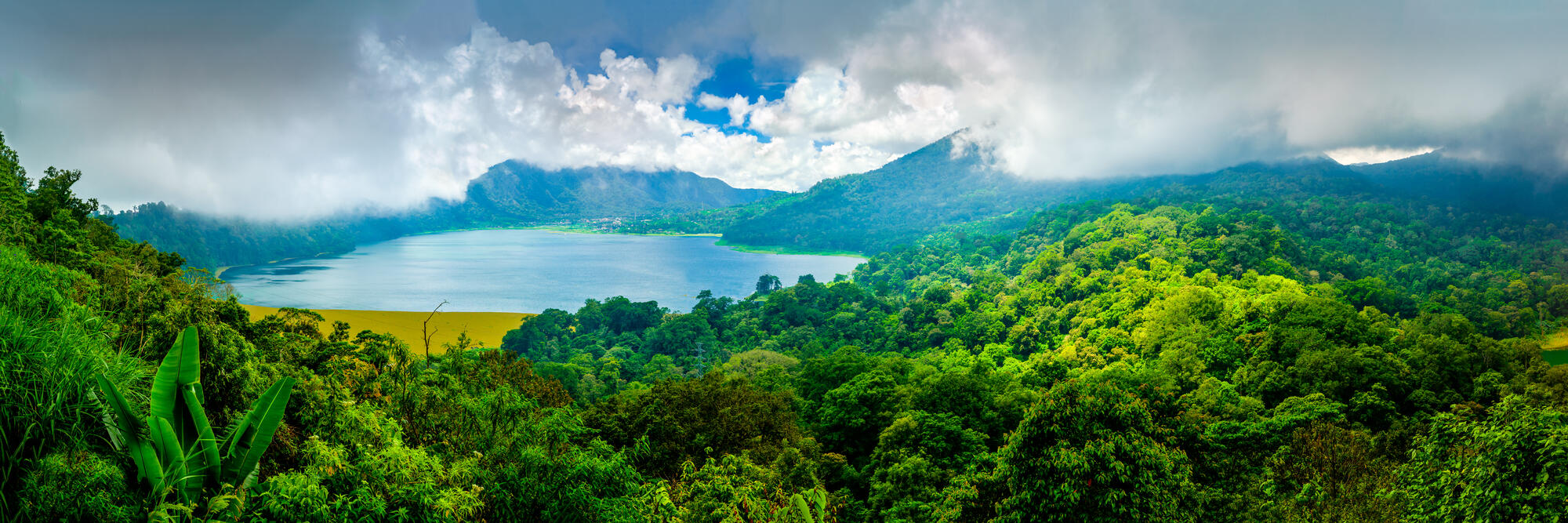
Moving to Indonesia means stepping into a vast archipelago of more than 17,000 islands with an ethnically and culturally diverse population of nearly 290 million. Most expats are based in the popular tourist hub of Bali or the sprawling metropolis of Jakarta, the country’s economic and financial centre. Indonesia is in the process of relocating its political capital from Jakarta to Nusantara, a purpose-built city under construction in East Kalimantan on the island of Borneo.
There are many pros and cons to moving to Indonesia, but with an open mind and a sense of adventure, the rewards of living in this enchanting archipelago are countless.
Living in Indonesia as an expat
Living in Indonesia as an expat often starts with a job offer. The country’s economy is Southeast Asia’s largest, and manufacturing, agriculture and trade are its biggest sectors, but oil, gas and mining punch above their weight as employers of foreign workers. Most expats relocate to work in these industries.
Telecommunications and teaching English are well-trodden paths for expats after work in Indonesia. The country is also the world’s largest producer of palm oil and a major nickel exporter, commodities that draw a steady stream of foreign professionals.
Indonesia is an exciting place to land, but the paperwork can test your patience. Obtaining a visa or work permit is a process riddled with bureaucracy, and the requirements have a habit of changing with little notice. Most working expats hold an ITAS (Temporary Stay Permit), sponsored by their employer.
Working in Indonesia
Visas for Indonesia
Work Permits in Indonesia
Cost of living in Indonesia
The cost of living in Indonesia can be strikingly low compared to Western Europe and North America, but your lifestyle choices can narrow the gap fast. A trip to the neighbourhood market for fresh, seasonal goods costs next to nothing. Modern, fully serviced apartments and imported goods (imported alcohol in particular carries heavy taxes) can push costs up sharply. For expats on corporate packages that cover housing, school fees and a driver, the arithmetic changes entirely; it pays to push hard for these benefits.
Expat families and children
For expats bringing the whole family over to Indonesia, education will likely be their biggest expense. Numerous schooling options exist, but most expats look beyond public education due to the language barrier. Often, international schools provide expat children with a smoother path to settling into their new home as they continue with a familiar curriculum in their home language. There are numerous international schools in Indonesia, and most are in Jakarta, although Bali’s selection is growing.
Indonesia’s healthcare sector is considered relatively underdeveloped, particularly outside Jakarta and Bali. Serious medical conditions routinely see expats evacuated to Singapore. Medical evacuation insurance is near essential, and most expat employers include it as standard. Air pollution in Indonesian cities (Jakarta, in particular, ranks among the most polluted in the world) is a genuine health hazard.
Safety in Indonesia is more of a concern than in some neighbouring countries, but the risks cluster around a few specific areas. Indonesia also sits on the Ring of Fire, so earthquakes, volcanic eruptions, and tsunamis are real possibilities; a go bag and registration with your home embassy are sensible precautions. With proper awareness, most expats live in Indonesia without serious incident.
International Schools in Indonesia
Healthcare in Indonesia
Safety in Indonesia
Climate in Indonesia
The climate in Indonesia is hot and tropical year-round, and the humidity can take some getting used to for those arriving from cooler latitudes. The country has two seasons rather than four: a dry season (roughly April to October) and a wet monsoon season (November to March) that brings heavy downpours and sticky conditions. On the upside, this climate keeps the greenery lush and the beaches in business.
Life in Indonesia will throw up the odd curveball, but expats who arrive with an open mind tend to find the rewards far outweigh the hassles.
Fast facts
Official name: Republic of Indonesia
Population: Nearly 290 million
Capital city: Jakarta (de facto). Indonesia has designated Nusantara, a new city under construction in East Kalimantan, as its future political capital, with a target date of 2028.
Other cities: Surabaya, Bandung, Medan, Semarang, Denpasar (Bali)
Neighbouring countries: Indonesia has land borders with Malaysia on the island of Borneo, Papua New Guinea on the island of New Guinea and East Timor on the island of Timor.
Geography: Indonesia is an archipelago of over 17,000 islands, with the five main islands being Sumatra, Java, Borneo (known as Kalimantan on the Indonesian side), Sulawesi, and New Guinea. Parts of Indonesia are quite mountainous, and much of the country is covered by dense tropical forests. Located along the Ring of Fire, the country has many volcanoes and is also subject to frequent earthquakes.
Political system: Unitary presidential constitutional republic
Major religions: Islam
Main languages: Bahasa Indonesia (official). English is widely used in business and expat circles, but is classified as a foreign language. Hundreds of regional languages are spoken across the archipelago.
Money: The Indonesian Rupiah (IDR). Sen subdivisions exist in name only and are not in circulation. Local and international banks are widely available, although many expats also maintain accounts in their home country. Cash is still commonly used in Indonesia, and ATMs are common in cities and tourist hotspots, but may be harder to find in rural areas.
Tipping: Standard 10 to 15 percent in restaurants unless included as a service charge. Round up the bill for taxis and give slightly more for hired drivers.
Time: GMT+7 to GMT+9
Electricity: 230V, 50Hz. Plugs with two round pins are generally used throughout the country.
Internet domain: .id
International dialling code: +62
Emergency numbers: 112 (general emergency, mobile phones), 110 (police), 113 (fire), 118 or 119 (ambulance)
Transport and driving: Cars drive on the left-hand side of the road. Major cities have public transport networks, and ride-hailing apps such as Grab and Gojek are ubiquitous. Traffic in Indonesian cities can be brutal, and many expats hire a local driver rather than brave the roads themselves.