
- Download our Jakarta Schools Guide
Expats have a wide variety of options when it comes to education and schools in Jakarta. Compulsory schooling starts at age seven in Indonesia. The government mandates 12 years of education, from primary school through to senior high school; public schooling at the primary and junior secondary levels is free.
Jakarta’s public schools are not popular among expat families, but the city has an impressive array of international schools. These cater to expat students from several countries, including the UK, the US, France, Germany, India, Japan, South Korea, New Zealand, Russia, and Singapore. Many international schools also offer the International Baccalaureate (IB) or Cambridge IGCSE and A-Levels programmes.
Public schools in Jakarta
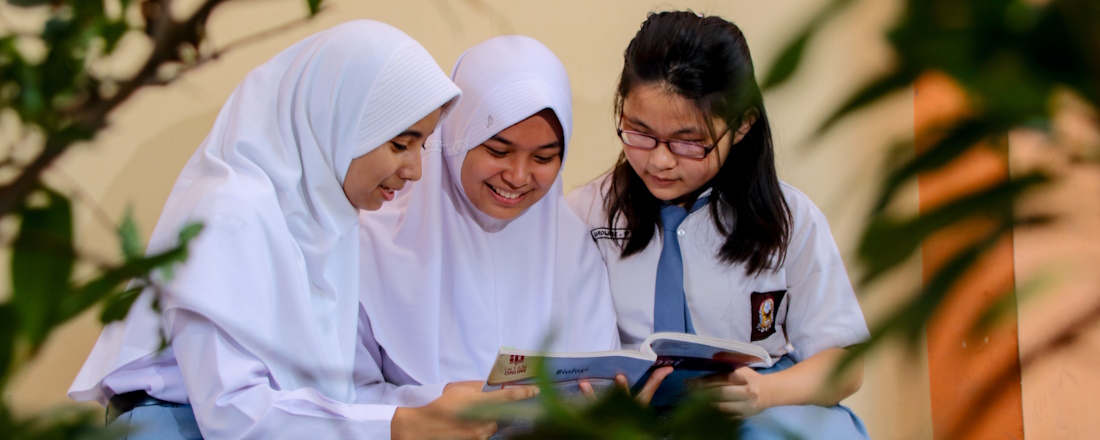
Public schools in Jakarta are administered by the local government and follow the Indonesian curriculum. The teaching language is Bahasa Indonesia.
The most significant deterrent for most expat families is the language barrier that exists in public schooling. Expats moving to the city with children generally enrol them in one of the many excellent international schools, especially if they’ll only be in Indonesia for a limited time.
Useful links
Private schools in Jakarta
Private schools in Jakarta usually offer an international curriculum alongside the local Indonesian curriculum, and classes are generally in English rather than Indonesian. The International Baccalaureate is commonly taught in these schools.
Non-international private schools in Jakarta are mostly attended by Indonesian students, but some expat parents also enrol their children. Fees are lower than at international schools, and there’s more opportunity for cultural integration. Bear in mind that admission processes at some private schools are competitive, and some may require proof of Indonesian residency.
International schools in Jakarta

Although international schools in Jakarta can be expensive, they usually offer a good standard of education. They also have the advantage of allowing children to continue with a familiar and internationally recognised curriculum.
In a bid to regulate the quality of education in Indonesia, the government no longer permits schools to use the word ‘international’ in their title. Before this regulation, low-quality schools would often tack ‘international’ on their names to justify charging high fees. Most international schools are now classified as Satuan Pendidikan Kerjasama (SPK), or Joint Cooperation Schools. Indonesian students at SPK schools are required to take civics, religion, and Indonesian language. International students must take Indonesian language and cultural studies courses.
Waitlists at popular SPK schools in Jakarta can be a year or longer, particularly at the most sought-after institutions. Families should begin the application process well before their planned move date.
International Schools in Jakarta
Useful links
Special educational needs in Jakarta
Children with special educational needs in Jakarta are served by two types of public schools: inclusive schools and extraordinary schools. Inclusive schools have a student body of both mainstream students and those with special needs, while extraordinary schools are dedicated solely to special-needs education. Most expat families feel that the government doesn’t offer adequate support and instead opt for private schooling.
Many international schools can provide the specialised services such a student would require, depending on the severity of the condition in question. Parents should enquire with individual schools to find out about the special-needs support they can offer and the costs involved.
Useful links
Tutors in Jakarta
Tutors in Jakarta are widely used, as they are across Indonesia. For expat families, tutors can be a great help in giving expat children a leg up as they adjust to a new school, especially if an unfamiliar curriculum or language is involved. Some expat families hire a tutor to help maintain a child’s mother tongue or to help them learn and refine Indonesian or English quickly.
The months leading up to final exams are busy for tutors, who are often hired to help students reach peak performance. Most tutors specialise in a particular subject, but some can help across the board, especially when it comes to teaching general essay writing and study techniques.