
- Download our Jakarta Schools Guide
Getting around in Jakarta can be difficult, so expats will need a sense of humour, the ability to plan ahead, and infinite patience. There are various modes of transport available, from luxurious Mercedes taxis with English-speaking drivers to the very basic bajaj, the Indonesian equivalent of a tuk-tuk.
Most wealthy Indonesians and expats employ a full-time driver to take care of their transport needs, but for the average Jakartan, this is a luxury they cannot afford. For most people living and working in Jakarta, buses, rail, ojeks, and bajaj are their only options.
The city’s railway system is being expanded, but the roads remain jammed in the meantime. Whether riding around in a comfortable air-conditioned car or holding on to the back of an ojek, one thing that is guaranteed in Jakarta is traffic congestion. Even the shortest road journeys can take hours, so it is advisable to allow plenty of time to reach your destination.
Transport and Driving in Indonesia
Public transport in Jakarta
Buses
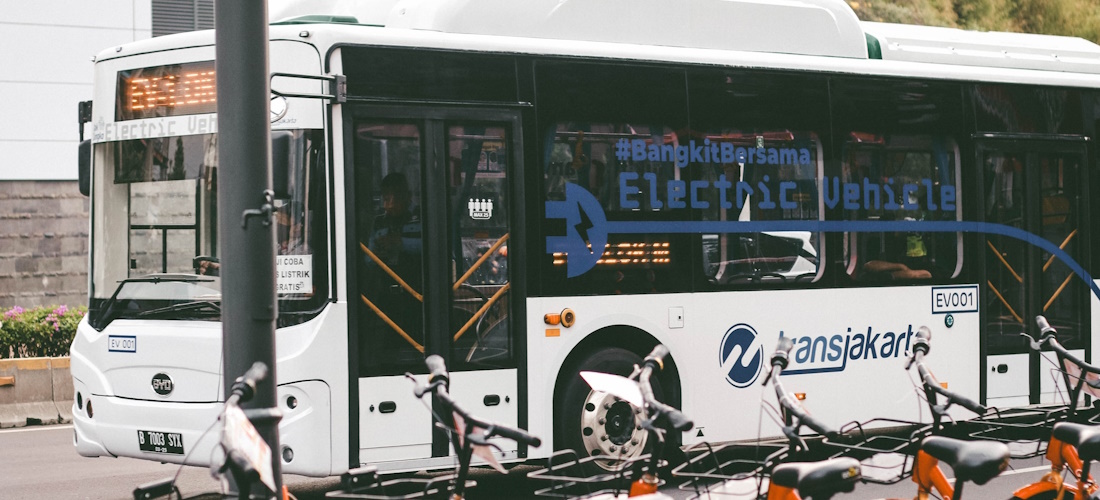
Jakarta is home to a rapid transit system known as TransJakarta Busway. These large, air-conditioned buses have fixed routes throughout Jakarta and its satellite cities. They travel in dedicated lanes, which helps skip some traffic. The busway has several corridors, and passengers may have to make transits between corridors to get from A to B, so it’s worth it to study the route and switches beforehand.
The Jakarta Busway is also integrated with feeder routes that shuttle passengers to the nearest bus shelter. Older privately owned bus services such as Kopaja and MetroMini have largely been replaced by modern Minitrans, Metrotrans, and Mikrotrans buses under the TransJakarta umbrella.
Trains
Trains run from Jakarta to the suburbs and beyond. The trains are busy and often very crowded on the KRL Commuterline, but trains remain the fastest way to travel in and out of Jakarta and avoid the gridlocked roads.
The Whoosh high-speed railway has dramatically cut the journey between Greater Jakarta and Greater Bandung. The high-speed segment takes around 35 minutes, although the full door-to-door journey via feeder trains is closer to 50 minutes. An extension to Surabaya is in the planning stages.
Mass rapid transit (metro rail)
Jakarta MRT has been in operation since 2019. Phase 1 of the north-south Red Line runs 10 miles (16km) between Lebak Bulus and Bundaran HI across 13 stations. An extension northward to Kota is under construction, and an east-west Yellow Line between Cikarang and Balaraja is in the early stages of development.
Fares can be paid with bank-issued contactless e-money cards or via the MyMRTJ app. The JakLingko integrated fare system works across all major Jakarta transit networks.
Light rail
Two light rail transit (LRT) systems operate in the city. Jakarta LRT currently runs between Velodrome and Pegangsaan Dua in North and East Jakarta. An extension south from Velodrome to Manggarai is under construction.
Jabodebek LRT (also known as the Greater Jakarta LRT) connects central Jakarta with Cibubur and Bekasi. A further extension to Bogor is planned.
As with the MRT, these systems accept various cashless payment methods, including bank-issued e-money cards and the JakLingko integrated fare system.
Useful links
- TransJakarta Busway
- KAI Commuter
- Jakarta MRT
- Whoosh: Jakarta–Bandung High-Speed Railway
- JakLingko: Integrated Transit Payment
Taxis in Jakarta
There are a number of taxi services in Jakarta. Ride-hailing apps such as Grab and Gojek are the most practical options for expats. Drivers are generally competent and speak reasonably good English. They are a safe bet for newcomers to Jakarta and those unfamiliar with the area.
Other local taxi drivers generally don’t speak English and often have only basic knowledge of the city. It is not unheard of for these drivers to get lost and for journeys to take longer than expected because they have to stop to ask for directions.
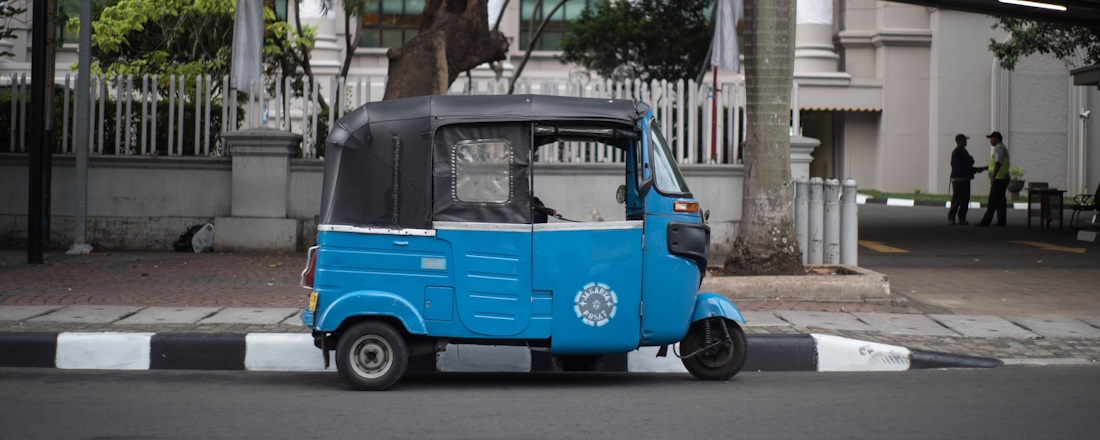
There are also ojeks, which are motorcycle taxis, and bajaj, which are motorised rickshaws.
Useful links
Driving in Jakarta
Driving in Jakarta is generally not recommended. For most expats who can afford it, a full-time driver is the easiest and most convenient option. The driver’s pay is based on a daily rate, and overtime is added if they work late and on weekends. A good driver is worth every penny, as they will have an excellent knowledge of the city’s roads and know the quickest routes to a given address.
Driver’s licences
Expats who prefer to drive themselves must obtain an Indonesian driver’s licence, known locally as a SIM (Surat Izin Mengemudi). Only holders of a KITAS (temporary stay permit) or KITAP (permanent stay permit) are eligible to apply. Applicants must pass both a theory and a practical driving test after a health check. Applications can be submitted at a SATPAS (police licensing office). Tourists can use an International Driving Permit for up to six months.
Useful links
Cycling in Jakarta
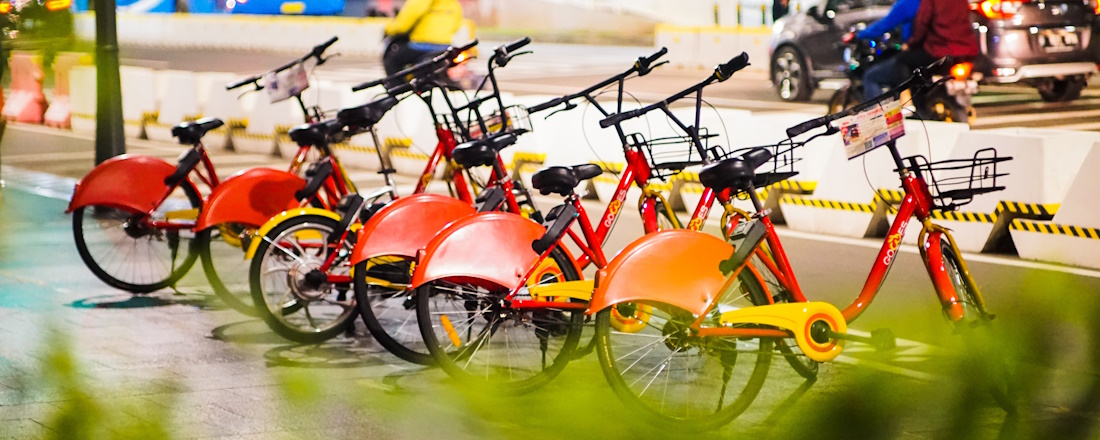
Cycling in Jakarta has not traditionally been advisable, but conditions have slowly improved. Bike lanes and cycle paths have been added along major corridors such as Sudirman and Thamrin, and the network has grown steadily. Cycling surged in popularity during the pandemic, and the infrastructure has started to follow suit.
Useful links
Walking in Jakarta
Walking in Jakarta is a challenge. Oppressive heat and humidity make it unpleasant for all but the shortest distances, and heavy pollution only adds to the discomfort. Pedestrian infrastructure has improved in the city centre, particularly along the Sudirman and Thamrin corridors, and conditions are more tolerable around shopping malls and some expat residential areas. In general, walking in Jakarta is not as pleasurable as it might be in other cities.