
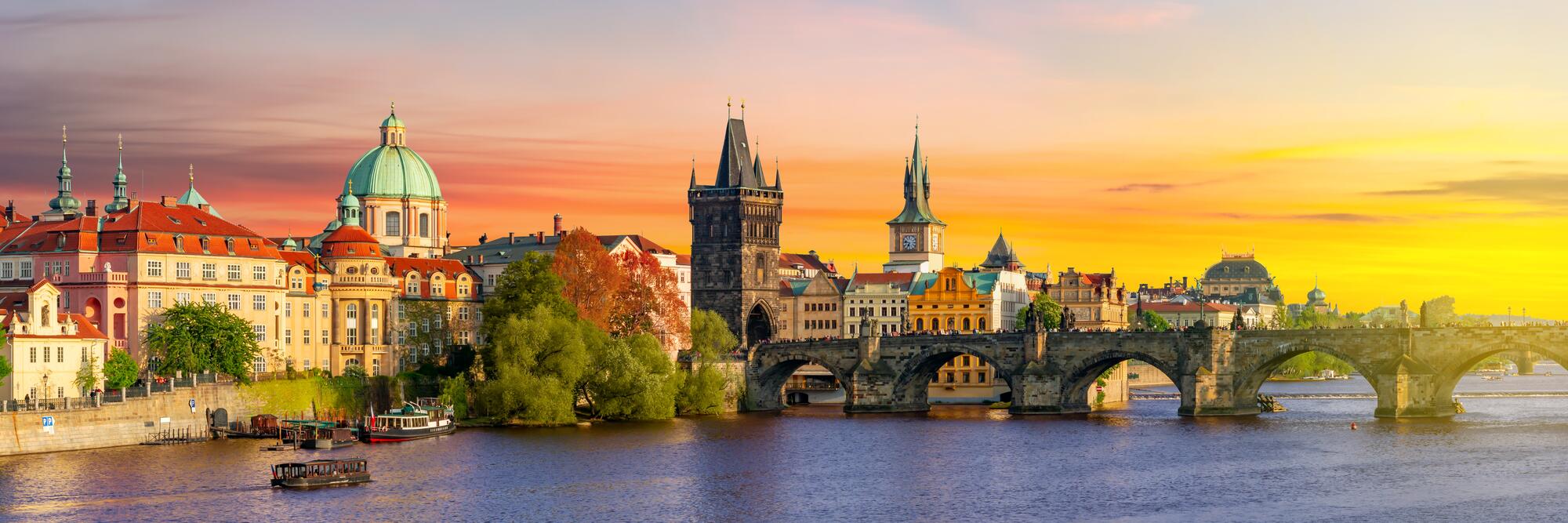
The cost of living in Prague is relatively high compared to other Czech cities, although it is more affordable than many major Western European capitals. As a city that ranks highest among Central and Eastern European urban centres for living expenses, prices for goods and services continue to rise, gradually aligning with other European cities.
Cost of accommodation in Prague
Prague is an attractive city for business, and as foreign companies relocate to the city and demand for accommodation increases, so do the costs.
Accommodation in Prague is available at various price points, from expensive serviced and furnished apartments to more affordable unfurnished options. You can decrease these costs by living in one of the city’s outlying districts, like Prague 4 or Prague 6, and choosing to live in an apartment instead of a house or villa.
Over and above rental prices, you should budget for the initial security deposit (legally capped at three times the monthly rent) and utility costs. Utilities in the country are generally paid annually or quarterly, so you must make an advance payment, which will be refunded if you use less than you initially paid for.
Renting Accommodation in Prague
Cost of transport in Prague
Prague’s public transport networks are consistently rated among Europe’s best, offering efficient and inexpensive travel options. The network offers discounted passes for various categories of passengers, such as students, senior citizens, and children.
You can benefit from purchasing long-term passes like monthly, quarterly or annual passes, which provide unlimited travel on the metro, trams, and buses at a lower cost per trip. With the Lítačka card or its mobile app version, you can conveniently manage your public transport passes and take advantage of available discounts.
While taxis can be expensive, the metro, tram, and bus services are cheap. The city centre is highly walkable, and you’ll likely only resort to public transport outside Prague 1. Cycling is also an option, although bike infrastructure develops slowly, with bike lanes incorporated into many of the pavements.
Transport and Driving in Prague
Cost of groceries in Prague
Groceries in Prague are exceptionally affordable, and you can make significant savings by buying local produce and preparing meals at home. Grocery prices in Prague are lower than in many Western cities, with a wide range of fresh fruits, vegetables, and other food items available at local markets and supermarkets.
When shopping for affordable groceries in Prague, you can visit popular local markets to find fresh produce and reasonably priced food items.
Discount supermarkets like Lidl, Penny Market and Kaufland offer a wide range of products at lower prices than other supermarkets, making them excellent options for budget-conscious shoppers. For speciality items or international products, you can check out shops like Tesco, Billa, and Albert.
Cost of entertainment and eating out in Prague
While eating out can cost just as much in Prague as in the rest of Europe, you can save money by going to the cheaper local restaurants, as opposed to those with an English menu that cater for tourists. Tourist-oriented venues often charge up to 50 percent more for similar dishes. Food carts and fast food restaurants also serve good food at a fraction of the price.
When it comes to entertainment in Prague, there is a wide range of options to suit various budgets. The city has a lively nightlife scene, with bars and clubs offering entertainment at different price points.
Prague offers numerous cultural events, museums, galleries and historic sites, many of which are free or have relatively low entrance fees. Various cultural venues offer free or discounted admission on national holidays. To make the most of your leisure time, you can also seek out seasonal activities like Christmas markets and outdoor concerts or try outdoor recreational options, including hiking in nearby natural areas.
Cost of education and schools in Prague
Although public schools in Prague are free for all residents, including expats, most teach in Czech. This may not be a viable option unless you plan to stay for the long term. That said, a few schools in Prague have programmes for bilingual or foreign language students.
Public schools in Prague follow the Czech national curriculum, while private bilingual schools typically combine the Czech curriculum with English teaching elements.
Although private bilingual schools cost a fair amount, they are much cheaper than the international schools in the city. These schools usually offer globally recognised curricula like the International Baccalaureate, American or British curricula, providing a completely international education that eases the transition for expat students.
Education and Schools in Prague
Cost of healthcare in Prague
The cost of healthcare in Prague can vary significantly depending on your choice of public or private facilities and the services required. As the capital city of the Czech Republic, Prague offers a sophisticated public healthcare system funded through mandatory health insurance contributions, ensuring all legal residents, including expats, have access to basic medical services.
Generally, public healthcare costs in Prague are reasonable, but you may encounter language barriers and lengthy waiting times for certain procedures. The public healthcare system may not cover some services, requiring additional private insurance coverage. These include elective surgeries, dental care beyond basic treatments, prescription medications and private hospital rooms. To address these challenges, many expats in Prague opt for private healthcare facilities, which typically provide shorter waiting times and English-speaking staff.
Cost of living in Prague chart
Prices may vary depending on the product and service provider. The list below shows average prices in Czech korunas (CZK) for Prague in April 2026.
| Accommodation (monthly rent) | |
| Three-bedroom apartment in the city centre | CZK 52,000 |
| Three-bedroom apartment outside the city centre | CZK 35,000 |
| One-bedroom apartment in the city centre | CZK 26,000 |
| One-bedroom apartment outside the city centre | CZK 22,000 |
| Food and drink | |
| Dozen eggs | CZK 80 |
| Milk (1 litre) | CZK 28 |
| Rice (1kg) | CZK 55 |
| Loaf of white bread | CZK 35 |
| Chicken breasts (1kg) | CZK 200 |
| Cheese (500g) | CZK 130 |
| Eating out | |
| Three-course meal for two at a mid-range restaurant | CZK 1,200 |
| Big Mac Meal | CZK 220 |
| Coca-Cola (330ml) | CZK 40 |
| Cappuccino | CZK 85 |
| Draft beer (local) | CZK 60 |
| Utilities/household | |
| Mobile phone (monthly plan with calls and data) | CZK 650 |
| Internet (uncapped ADSL or cable – average per month) | CZK 530 |
| Basic utilities (average per month for a standard household) | CZK 7,300 |
| Transportation | |
| Taxi rate/km | CZK 35 |
| City-centre public transport fare (one way) | CZK 39 |
| Gasoline/petrol (per litre) | CZK 37 |