

Expats should find it fairly easy to manage banking, money and taxes in the Czech Republic. Banking systems are modern, and it is relatively straightforward to open a bank account and apply for a credit card.
Although the Czech Republic is part of the EU, the country still uses the Czech koruna as its currency. It is legally bound to adopt the euro as its currency at some point in the future, but no date has been set.
Money in the Czech Republic
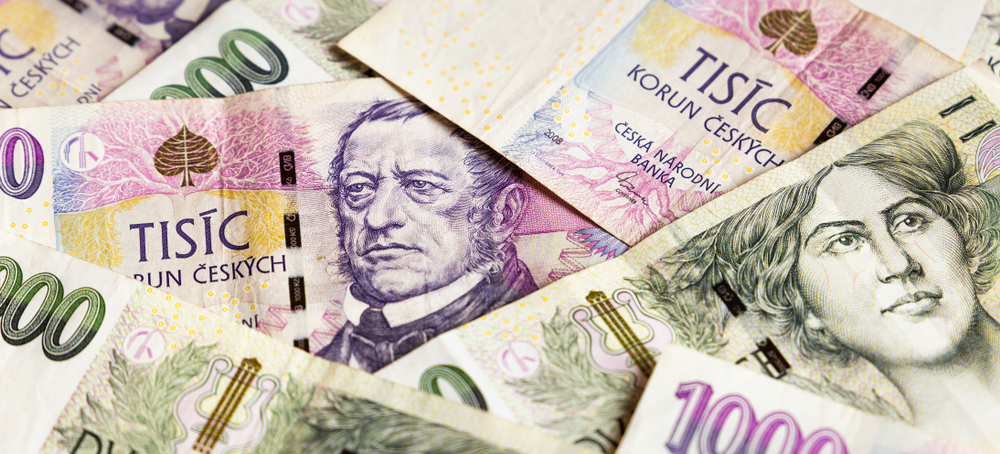
The Czech Republic's currency is the Czech koruna, and its international abbreviation is CZK.
The following denominations are available:
- Coins: 1 CZK, 2 CZK, 5 CZK, 10 CZK, 20 CZK, and 50 CZK
- Notes: 100 CZK, 200 CZK, 500 CZK, 1,000 CZK, 2,000 CZK, and 5,000 CZK
Banking in the Czech Republic
Expats who plan to stay in the Czech Republic for more than a couple of months will need to open a Czech bank account, especially if they will be receiving their salary in korunas.
There is no shortage of banks in the Czech Republic, and some offer services tailored to the needs of expats. The largest bank in the Czech Republic is Česká Spořitelna. Some international banks, including HSBC and Western Union, also operate in the country.
Opening a bank account
It is not difficult for expats to open a bank account in the Czech Republic. You'll generally need to present your passport plus a second form of ID (such as a driver's licence). You may also be asked for your visa and work permit, as well as proof of a Czech address and proof of employment.
You'll need to provide an initial deposit when opening a bank account in the Czech Republic. Different banks will have different minimum amounts. Transaction fees in the Czech Republic, such as those for international transfers, can be high and are usually charged in addition to a monthly bank account fee.
ATMs and credit cards
ATMs are easy to find in the Czech Republic, and many offer language options so expats can use them in their preferred language. If you use an international card or an ATM that isn't your bank's, you'll pay a fee.
Contactless cards and mobile wallets are popular forms of payment in the Czech Republic, although it's still best to carry some cash. Some smaller establishments still prefer cash payments.
Taxes in the Czech Republic

Expats who spend more than 183 days within a tax year in the Czech Republic are considered tax residents. Those who fall into this category will be taxed on their worldwide income, unless their home country has a double taxation treaty with the Czech Republic. Expats who are not tax residents of the Czech Republic are only taxed on their income earned in the Czech Republic.
As tax matters can be complex for expats, it is recommended that they consult a specialist tax adviser with experience in expat matters.