
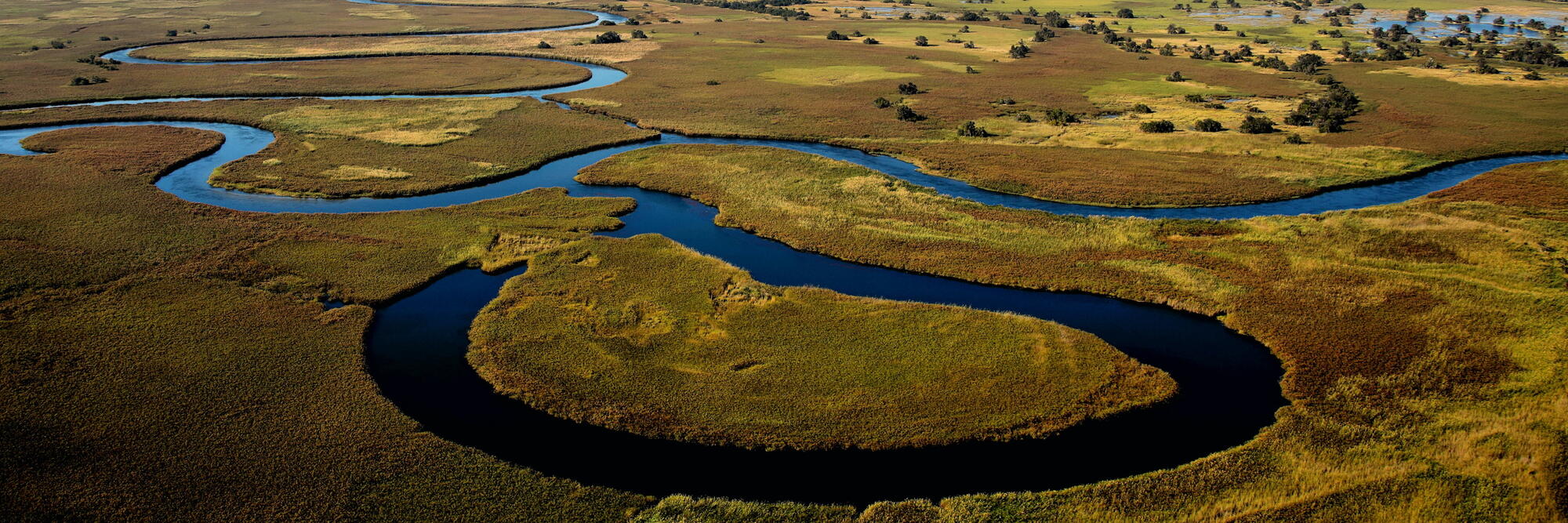
You may be inspired by images of the vast Kalahari Desert and the Big Five when moving to Botswana. Around 70 percent of the country is semi-arid sandy savannah, but Botswana is far from entirely dry and dusty.
This landlocked Southern African country has a striking variety of scenery, and its wildlife and natural resources are plentiful. To top it off, the Batswana have a reputation for warmth and hospitality, so new arrivals tend to settle in easily.
Living in Botswana as an expat
Expats who live in Botswana are within reach of some of Africa’s best safari territory. The Okavango Delta is home to lions, leopards, hippos, and crocodiles, and Botswana has the world’s largest elephant population. The salt flats of the Makgadikgadi Pans are a complete contrast, and they’re among the largest on Earth.
Tourism, especially ecotourism, is a major part of the economy. Botswana is an upper-middle-income country with a competitive banking system and a long record of political stability. In 2024, voters ended the Botswana Democratic Party’s 58 years in power, and the handover to the new government was peaceful.
Diamonds are the country’s biggest earner by far, and foreigners from across Southern Africa and further afield have come to Botswana to work in the industry. Several international mining corporations have set up regional headquarters in Botswana to prospect for diamonds, gold, uranium, and copper. Copper is a growth area, and mining companies have big expansion plans for the Kalahari Copper Belt in western Botswana.
Expats find work in sectors from mining and tourism to finance and ICT. Employers must show they tried to hire a qualified citizen before they can recruit a foreigner, so most expat jobs are senior or specialist roles.
Accommodation in Botswana is plentiful in the bigger towns and cities. Freestanding houses, townhouses, duplexes, and apartments are all available, and plenty of expat homes have a large garden and a swimming pool. Rent is reasonable by Western European and North American standards, but good properties in Gaborone are quickly snapped up. Ask landlords whether a property has a backup water tank or a generator, because water and power cuts are common in parts of Greater Gaborone.
Public transport in Botswana is limited. To reach remote areas, or even to get around the bigger towns, you’ll likely need a car of your own, so factor this into your budget. Some expats also hire a driver. Botswana’s roads can be tricky. Livestock and wild animals are a hazard on rural roads, so avoid night-time journeys outside town if you can.
Most locals get around towns and cities in combis. These are shared minibus taxis on set routes. In Gaborone, Bolt and inDrive are handy alternatives. Botswana Railways suspended its passenger trains in 2020, and there’s no firm date for their return. Long-distance travellers take intercity buses or fly with Air Botswana between Gaborone, Francistown, Maun, and Kasane.
Research your healthcare options before you move. Both public and private hospitals and clinics are available in the main cities and towns, but the public sector is under-resourced. The government declared a public health emergency in 2025 because of severe medicine shortages. Expats generally rely on private healthcare, and patients in a serious medical emergency may need evacuation to South Africa. Make sure you have health insurance for private treatment and medical evacuation.
Banking, Money and Taxes in Botswana
Working in Botswana
Transport and Driving in Botswana
Cost of living in Botswana
Most expats find the cost of living in Botswana fairly low by international standards. Salaries and employment packages for foreign hires are usually generous, so expats often live in relative luxury. Factor in the cost of private healthcare and, for families with children, school fees.
Local produce is easily affordable, although imported goods can be expensive. Rent will most likely be one of your biggest expenses as an expat, and it’s highest in upmarket suburbs such as Phakalane.
Cost of Living in Botswana
Accommodation in Botswana
Families and children in Botswana
Expat families in Botswana usually send their children to a private or international school. Fees are high, but they’re still far lower than at international schools in Europe. Places at the top international schools are limited, so apply early. Expat children can also attend public schools, but in the first years of public primary school, lessons are largely in Setswana, and standards are low at some rural schools. The public school year is from January to December.
Safaris are the classic family getaway in Botswana. Chobe National Park and the Okavango Delta are favourites for long weekends, and Gaborone residents have the Mokolodi Nature Reserve on their doorstep. Hikers can climb Kgale Hill for views over the capital, and adventurous families can tackle 4x4 trails and overland trips through the Kalahari. Neighbouring Namibia and South Africa are a short flight away, and Victoria Falls is about an hour’s drive from Kasane.
Education and Schools in Botswana
Healthcare in Botswana
Climate in Botswana
You’ll likely find the climate in Botswana as warm as the Batswana themselves. The country is semi-arid, and it’s hot and dry for much of the year. Summer is from November to March, and temperatures can reach above 104°F (40°C). This is also the rainy season, and January and February are usually the wettest months. Winter is from May to August. Days are dry and sunny, but frost is common at night in the southwest.
The Okavango Delta is at its fullest in winter, which is also peak safari season. The floodwater is from the previous summer’s rains in Angola.
Botswana has its share of pros and cons, so weigh both before you make the move. Many expats find life in Botswana a real adventure, and a good number fall in love with the country and decide to stay for good.
Weather in Botswana
Pros and Cons of Moving to Botswana
Fast facts
Official name: Republic of Botswana
Population: Around 2.6 million
Capital city: Gaborone (also the largest city)
Other cities: Francistown, Maun, Selebi-Phikwe, and Kasane
Neighbouring countries: Botswana is bordered by South Africa to the south, Namibia to the west and north, Zambia to the north, and Zimbabwe to the east.
Geography: Botswana is mostly flat, and about 70 percent of the land is part of the Kalahari Desert. The Okavango Delta in the northwest is one of the world’s largest inland deltas and a UNESCO World Heritage Site. The Makgadikgadi salt pans are in the northeast.
Political system: Unitary parliamentary republic with an executive president
Major religions: Christianity
Main languages: English (official) and Setswana (national). Most Batswana speak Setswana at home, and English is the language of business and government.
Money: The Botswana Pula (BWP) is divided into 100 thebe. ATMs and card facilities are widely available in the major towns and cities, but you’ll need cash in remote areas, where card machines are scarce.
Tipping: A tip isn’t compulsory, but around 10 percent is customary in restaurants when service isn’t included on the bill. Safari guides and lodge staff also expect tips.
Time: GMT+2 (Central Africa Time). There’s no daylight saving time.
Electricity: 230V, 50Hz. Plugs with three rectangular pins (type G) are used, as are plugs with three round pins (types D and M).
Internet domain: .bw
International dialling code: +267
Emergency contacts: 999 (police), 997 (ambulance), 998 (fire), 911 (private medical rescue)
Transport and driving: Motorists drive on the left-hand side of the road. Public transport is limited, so expats usually have a car. Rural roads are risky at night because of wildlife and livestock.