

This article is provided by Sergio of Verithic, a free site that compares the towns around Barcelona and Madrid using official data.
Most people moving to Barcelona start with the flat. We did too. Before we left Barcelona for a town in the Maresme, we viewed homes in more than 10 different towns. We worked out what we needed after each viewing, house by house, instead of deciding first where it made sense to look. It took us more than a year to go from wanting to move to actually moving.
If I did it again, I’d do it the other way round. You can change flats in a year or two without much drama. The town decides how much of your day goes on getting places, how far your money stretches, and what an ordinary week feels like. Settle that first, and the house-hunting gets a lot shorter.
Count the minutes the way you’ll live them
Train timetables around Barcelona cover only part of the trip, because they start and end at the station. The ride from Castelldefels into the city is quick, and nobody lives on the platform. The trip gets longer once you add the walk to the station, the wait, a change onto the metro, and the walk at the other end.
At Verithic, we time the whole journey, from the centre of each town to the centre of Barcelona, for departures between 7am and 9am, with waits and changes included. Measured that way, Castelldefels is a little over half an hour away. L’Hospitalet, which shares metro lines with the city, is about 20 minutes away.
Delays are the part no timetable shows. Rodalies, the commuter rail network, often runs late, and now and then a line or even the whole network is suspended for hours or days. Whichever town you pick, sort out a plan B before you need it: another line or a bus you can switch to, and an employer who’s relaxed about home working on bad days. When we built Verithic, we wanted our minutes to reflect real mornings, so we’re folding in the incidents reported on each line, month by month.
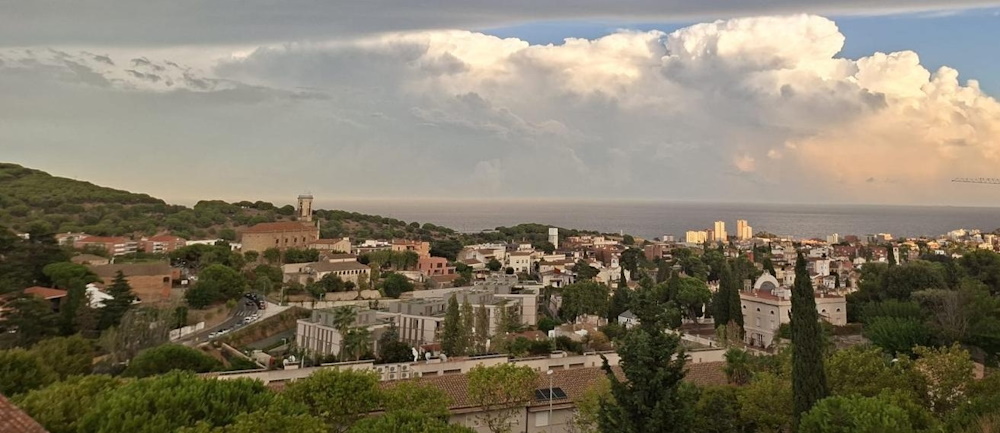
The gap between car and public transport surprises most people. I live in a town in the Maresme, the stretch of coast northeast of Barcelona. With no traffic, Plaça de Catalunya is about 25 minutes away by car. By public transport at rush hour, it’s closer to 50 minutes, because the town has no station and no direct service into the city.
Frequency counts too. Some towns on the edge of the city have a departure every couple of minutes in the morning peak, while many coastal towns rely on one line with a handful of trains an hour. Miss one and you’ll feel it. Before you fall for a town, do the trip once on a weekday morning.
Further out isn’t always cheaper
Moving out of the city is the obvious way to save money, and it works. The towns that border Barcelona are clearly cheaper to buy or rent in than the city itself.
Beyond that first ring, though, distance stops paying for a while. In the official sales records we work with, prices barely change between towns about half an hour from the centre and those 45 minutes out. You add a quarter of an hour to every journey, twice a day, and save very little. The real drop comes further away than most people expect.
Some towns break the pattern altogether. Sant Cugat has a fast FGC train line and international schools nearby, and it costs as much as Barcelona or more. Castelldefels is about level with the city. Compare towns using the same source and the same period, rather than the asking prices on portals.
Running costs vary as well. Each town council sets its own rate of property tax, the IBI, so two neighbouring towns with similar homes can send you very different bills. If you’re buying, ask to see the latest IBI receipt for any home you’re serious about.
Picture an ordinary week
If you have children, start with school, because it can rule out half the map before you look at a single flat. State schools in Catalonia teach mainly in Catalan, and when a school has more applicants than places, living close to it is one of the main criteria. What counts is the address where you’re registered on the town’s padró, the municipal register. Applications for the next school year open in spring; arrive mid-year and you take whatever places are left. In practice, you’re choosing a street as well as a town.
International schools free you from the address. You pay fees and can live wherever you like, but the school run becomes part of your day. Outside the city, they cluster around Sant Cugat and Cerdanyola, across the Baix Llobregat from Esplugues down to Castelldefels and Gavà, on the Maresme coast, and around Sitges. Time the school run in the same way you time the work commute.
Where the town sits shapes the rest of the week. Along the Maresme, the railway runs beside the sea, and in towns like Montgat or Vilassar de Mar the beach is a few minutes’ walk from the centre. Many of those towns depend on that single line, which brings us back to plan B. Inland, Vallès towns such as Sant Cugat, Sabadell, or Granollers give you more space and more of a city of their own. Summers there are hotter and winters colder than on the coast. To the southwest, El Prat and Castelldefels put you near the airport, which is worth a lot if you fly for work every week.
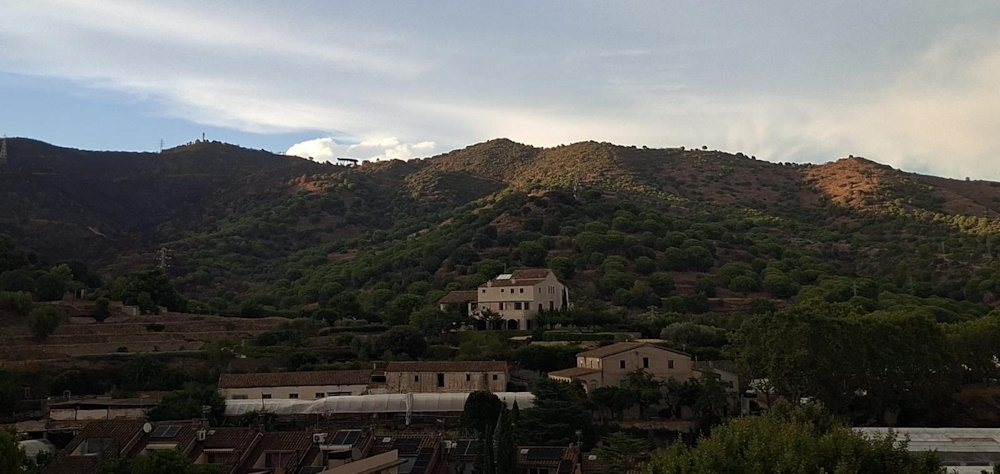
Then there are the hills and the urbanitzacions, estates of detached houses with gardens. Many of them are outside the bus network. Begues, up behind Castelldefels, is under 40 minutes from the city by car and about 80 minutes by public transport. You get space and quiet, and in exchange, every adult needs a car, and the teenagers will need lifts for years.
Size changes daily life as well. In a small town, you’ll know the baker within a month, but the nearest A&E or a secondary school with free places may be in the next town over. In a big one like Sabadell or Terrassa, you have all of that within reach and lose the village feel. Think of a wet Tuesday in February and ask yourself which you’d miss.
Before you sign
Visit at the hours you’ll actually live there. Do the commute on a weekday at 8am, then come back on a Sunday afternoon and see whether the place is lively or shut. Drop into the town hall’s citizen service office and ask how registering on the padró works and which schools you’d be near.
Then listen to the people who already live there. The Diputació de Barcelona, the provincial council, runs a survey called the Dibaròmetre, which asks residents town by town how satisfied they are living there and what bothers them most. A town whose biggest complaint is parking is a very different place from one where it’s the trains or safety. The town’s Facebook group is the informal version: read a few months of posts, because the complaints tell you more than the praise.
Above all, ask someone who has lived there for a few years what they’d change. If the answer is the commute, believe them.