
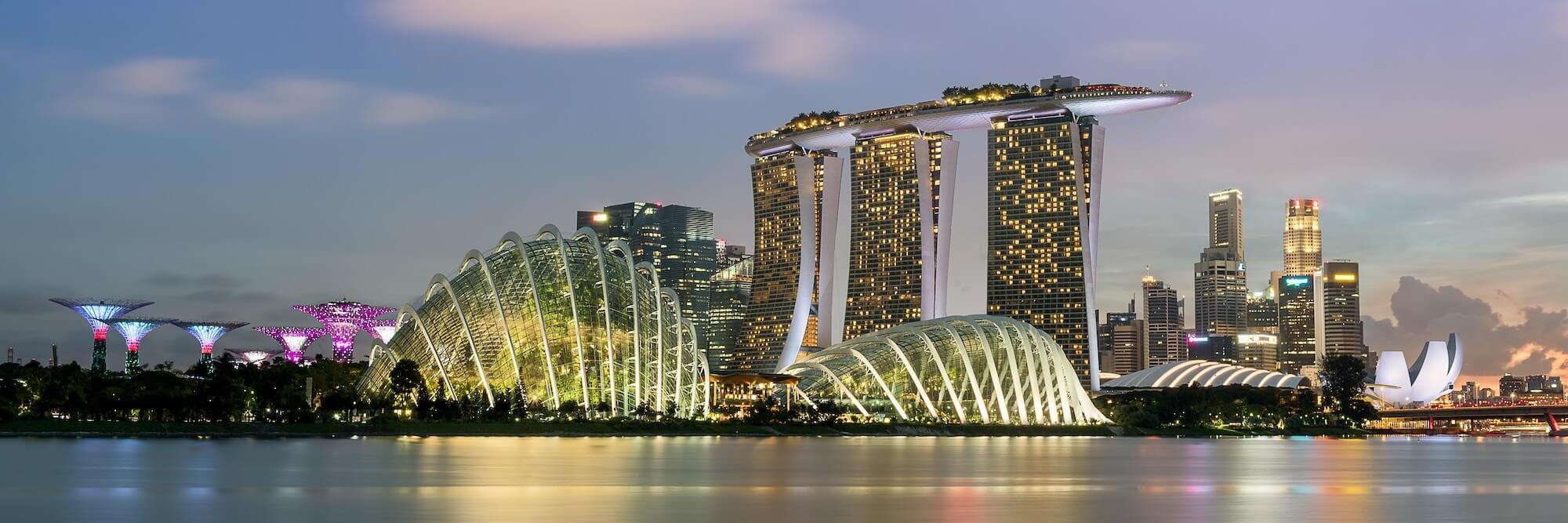
Alex is a British chartered accountant who left London in 2009 and spent the next decade and a half moving across Southeast Asia, buying property, making mistakes, and learning how the region actually works. He came back to Singapore in 2023 – this time with his wife and two young children – and realised he’d stopped thinking of it as a posting and started thinking of it as home. He founded Rumavi somewhere in between, mostly because the information he wished he’d had when he first arrived didn’t seem to exist anywhere.
Connect with Alex on LinkedIn and check out his independent relocation and property advisory platform, Rumavi. Also, make sure to read his advice on the 60 Percent Rule in Singapore.

About Alex
Q: Where are you originally from?
A: United Kingdom (London)
Q: Where did you move to?
A: Singapore
Q: When did you move?
A: First moved in 2009. Left in 2016. Came back with family for good in 2023.
Q: Is this your first expat experience?
A: No. I’ve lived in seven countries across Europe, the Middle East, and Southeast Asia. Singapore is the one I keep coming back to.
Q: Did you move here alone or with a spouse/partner or family?
A: With my wife and two young children. The first time I moved here, I came alone. Coming back with a family is a completely different experience – you see the city through different eyes.
Q: Reason for moving?
A: Honestly? I left London in 2023 knowing I didn’t want to raise my children there. I’d spent years moving across Southeast Asia, watching the region grow, investing in it, advising people on it. Singapore was the obvious answer. It's safe, world-class schools, a city that actually works. It stopped being a career move and became a life decision.
Living in Singapore
Q: What do you enjoy most about your host city and Singapore in general?
A: Singapore in 2026 is a city that has figured something out that most cities haven’t. It’s genuinely multicultural without the tension. My kids go to school with children from thirty different countries, and nobody thinks that’s remarkable – it’s just Tuesday. The food is the obvious answer everyone gives, but the real thing I love is the sense that the city is run by people who actually thought it through. Parks, transport, hospitals, schools – there’s an intentionality to how this place works that you stop noticing until you go somewhere else for a week and come back grateful.
Q: Have you had any low points? What do you miss most about the United Kingdom?
A: The first six months back were harder than I expected, and I’d lived here before. You arrive with a family, two kids who need schools and friends and routines, and the logistics of setting everything up hit all at once. The upfront costs are real – we were significantly poorer on paper before we were settled. I miss proper cold weather. I miss walking in October when the leaves are turning. Singapore is relentlessly tropical, and there are days when you’d give a lot for a grey English afternoon.
Q: What misconceptions about Singapore, if any, have you learned were not true?
A: That it’s sterile or soulless. People who’ve never lived here say that. The Singapore they’re imagining is the airport and the CBD. Spend time in Tiong Bahru on a Saturday morning, or in Geylang at midnight, or in the old kampung houses near Joo Chiat, and the city shows you something completely different. It has texture. It has history. It’s just not loud about it.
Q: What are the biggest adjustments you had to make when settling into expat life in Singapore? Did you experience any culture shock?
A: The financial reality of arriving. Nobody models this properly before they land. Three months’ rent upfront, international school fees payable a term ahead – you can arrive with a strong salary and find yourself $50,000 lighter before you’ve properly settled in. The second adjustment was property. I’d spent years advising people on property across the region, and I still underestimated how different the Singapore market feels when you’re living in it with a family, thinking about schools and proximity and which neighbourhood you actually want to build a life in.
Q: What are your favourite things to do on the weekend? Any particular places or experiences you’d recommend to fellow expats?
A: Saturday mornings at one of the hawker centres near our place – the kind where you’ve been going long enough that the auntie already knows your order. East Coast Park with the kids in the early morning before it gets too hot. Cycling along the Rail Corridor, which is genuinely one of the most beautiful things Singapore has quietly built. And increasingly, travelling – Singapore’s position in the region means you can be in Penang, Bali, or Da Nang for a long weekend without it feeling like a major expedition.
Q: You’ve lived across Southeast Asia for many years. For someone arriving in Singapore who’s also curious about the wider region – Bali, Vietnam, Malaysia, Thailand – where do you start?
A: Start with Malaysia, specifically Penang or Johor Bahru if you’re in Singapore. It’s close enough for a weekend, different enough to feel like a different world, and it gives you a gentle entry point into how the region works. Then go further. Da Nang for a week. Chiang Mai for a long weekend. Phnom Penh, if you want to understand where the region is going rather than where it’s already arrived.
The thing about living in Singapore is that it makes the rest of Southeast Asia accessible in a way that genuinely changes how you think about the region. Once you’ve spent time across it, the idea of being based anywhere else in the world feels like a narrower life. That’s not loyalty, it’s just simple geography.
Q: What’s the cost of living in Singapore compared to London? Are there specific things that are especially expensive or cheap there?
A: Higher than London in some ways, lower in others. Housing is expensive – a three-bedroom condo in a decent area runs $5,000–$8,000 a month. International schools are $25,000–$45,000 a year. A car costs more here than almost anywhere on earth once you factor in the Certificate of Entitlement, which can run $100,000 on its own. But eating out is genuinely cheap if you use hawker centres, healthcare is excellent and reasonably priced, and you don’t need to spend money on heating, a car, or the UK's general tax burden. Net net, it’s expensive, but you get a lot for it.
Q: What’s public transport like in and across Singapore?
A: Among the best in the world, genuinely. The MRT is clean, reliable, air-conditioned, and covers most of the island. Grab fills in the gaps. The only frustration is that last-mile connectivity in some residential areas is genuinely poor – you can be five minutes from an MRT station, and it feels like twenty in the heat. But for a city this size, the system is remarkably good.
Q: What do you think of the healthcare available in Singapore? What should expats expect from local doctors and hospitals?
A: Excellent and underrated. The public hospitals, such as SGH, NUH, and KKH, are world-class. Wait times in the private system are short. The standard of care is genuinely high. The one thing expats need to know is that healthcare here operates on a fee-for-service model – there’s no NHS equivalent – so good health insurance isn’t optional, it’s foundational. Sort this before you arrive, not after.
Q: What’s the standard of housing like in Singapore? What different options are available?
A: High, but the options look different depending on your budget and situation. Most expats end up in condominiums – private developments with pools, gyms, and security. Quality varies significantly. Landed housing (actual houses with a garden) exists but is expensive and legally restricted for foreigners. HDB flats, the public housing most Singaporeans live in, are generally not available to foreigners to buy, though some can be rented. The key thing to understand is that buying here as a foreigner carries a 60 percent stamp duty, which makes renting the only sensible financial choice for most people until they achieve Permanent Residency.
Q: Are there any areas or suburbs you’d recommend for expats to live in?
A: Holland Village and Buona Vista for families who want a neighbourhood feel and good school proximity. Tiong Bahru if you want character and walkability. East Coast, if you have kids and want space, parks, and an easy weekend life. Avoid making a decision based on proximity to one school – the MRT means most of the island is more accessible than you’d think.
Meeting people and making friends in Singapore
Q: Was meeting people and making friends in Singapore easy? How did you go about meeting new people?
A: Easier than I expected, harder than it looks from the outside. Singapore has a huge, well-established expat community, which means the infrastructure for meeting people exists – running clubs, school parent networks, industry groups, and co-working spaces. The challenge is that people cycle through quickly. You make a good friend, and two years later, they’ve been posted to Dubai or relocated back home. You develop a tolerance for that impermanence, or you find friends who’ve decided, like us, that this is home for the long term.
The honest answer for how it actually happened: school. Once you have kids in school here, you meet people naturally and quickly. The parent community is genuinely warm, and the international mix means everyone understands what it feels like to be new. Outside of that, I’d say joining something with a regular cadence – a sports league, a book club, a regular run group – matters more than one-off networking events. Consistency is how acquaintances become friends.
Q: Have you made friends with locals, or do you mix mainly with other expats? What advice would you give to new expats looking to make friends with the locals?
A: Yes, genuinely – and they’re some of my closest friendships here. But it took longer and required more intention than making expat friends. Singaporeans are warm, but they’re not immediately open in the way Australians or Americans tend to be. They don’t do small talk for its own sake, which can read as cold until you understand it isn’t.
The best advice I can give: don’t move exclusively in expat circles, especially in the early months when it’s tempting because it’s easy. Go to the hawker centre near your home often enough that you become a regular face. Join something local rather than an expat version of the same thing. And don’t mistake reserve for disinterest – Singaporeans who let you into their world tend to stay there. Those friendships are worth the slower build.
Working in Singapore
Q: How easy or difficult was getting a work permit or visa? Did you tackle the visa process yourself, or did you enlist the services of an immigration consultant?
A: Relatively straightforward if you come prepared, genuinely complicated if you don’t. Singapore’s Employment Pass system is well designed, and the process is transparent – MOM publishes the criteria, and the timelines are predictable. I handled it myself the first time around and used an immigration consultant on the return in 2023, mostly because I had a company to set up simultaneously and didn’t want to manage both at once. For most senior professionals coming on a corporate transfer, the company handles it. For entrepreneurs and founders, it’s worth getting proper advice upfront rather than learning the nuances the hard way.
Q: What is the economic climate in Singapore like?
A: Resilient in a way that still surprises people who haven’t watched it closely. Singapore has no natural resources, no domestic market to speak of, and sits in a region that’s been politically complicated for decades. And yet it consistently performs. In 2026, it remains one of the most attractive places in the world to base a business or a regional headquarters – low corporate tax, genuine rule of law, a government that makes decisions with a 20-year horizon rather than an electoral one. The wealth management sector has expanded significantly over the last three years as capital has moved east from Europe and the US. There’s a tangible energy in the business community right now that feels different from a decade ago
Q: How does the work culture in Singapore differ from that in London?
A: More direct than British culture in some ways, more hierarchical in others. In the UK, there’s a particular kind of polite ambiguity – nobody says what they mean, and you’re supposed to read between the lines. Singapore doesn’t really do that. If something needs to be said in a meeting, it gets said. That took some adjustment. At the same time, seniority matters here in ways that can feel unfamiliar if you’re used to flat structures. Decisions move up rather than across. Once you understand that, you stop being frustrated by it and start working with it. The other thing worth knowing is that people here work hard, genuinely hard, and the boundaries between work and personal time are more porous than they’d be in Europe. That’s a trade-off you make consciously, or it makes itself for you.
Family and children in Singapore
Q: How has your partner adjusted to your new home?
A: Better than I did, honestly. She took to Singapore faster and more naturally than I expected – found her people through the kids’ school and built a social life that actually has roots. The city is genuinely good for families with young children. Safe, easy to navigate, full of other families in the same situation. The thing that took adjustment was the domestic side of life – helpers, managing a household differently, finding your rhythm in a place where everything from grocery shopping to getting a plumber works slightly differently than you’re used to. But she navigated all of that with more grace than I managed the first time I lived here alone.
Q: Did your children settle in easily? What were the biggest challenges for them during the move?
A: Faster than we expected, which was the best surprise of the whole move. Children are more adaptable than adults give them credit for, especially when they’re young enough that school becomes their whole world within weeks. The international school environment helped enormously – every class has children who arrived recently, so nobody is the new kid for long. The harder part was the heat, initially. Coming from the UK, the idea of playing outside at midday takes some adjustment. And there’s a period, maybe two or three months in, where they miss their friends from home with a specific ache that’s hard to watch. That passes. New friendships form. But don’t underestimate that window.
Q: What are your favourite family attractions and activities in Singapore?
A: East Coast Park on a Saturday morning before 9am, before it gets too crowded and too hot. The Night Safari – genuinely one of the best wildlife experiences in the world, and it holds up every time. Gardens by the Bay is for visitors, but also just for us – it’s one of those places Singapore built that still feels slightly improbable. The hawker centres, honestly, teaching kids to eat properly at a kopitiam rather than a restaurant is one of the better things we’ve done. And the proximity to the rest of the region: we’ve done weekend trips to Penang, Bali, and Bintan with the kids that wouldn’t have been possible from anywhere else.
Q: What are the schools in Singapore like? Any particular suggestions?
A: Excellent, but not interchangeable – and that distinction matters more than most families realise before they arrive. The international school landscape in Singapore is large and genuinely varied: British, American, IB, and bilingual programmes, each with its own culture and university placement outcomes. The mistake most families make is choosing a neighbourhood first, only to discover the school they actually want has an 18-month waiting list. Do it the other way around. Visit schools before you sign a lease. Ask about university placements, the actual community, and what percentage of students stay through to graduation rather than cycling out every two years. For British families, Tanglin Trust and Dover Court are the established choices. For IB, Singapore American School and UWC have strong reputations. For something smaller and more community-oriented, there are newer schools worth looking at. Budget $25,000–$45,000 per year per child, payable a term ahead. That number comes as a shock to most people. It shouldn’t – plan for it before you arrive.
Final thoughts
Q: Any advice you’d like to offer to new arrivals in Singapore?
A: Do the numbers before you fall in love with the idea. Singapore rewards people who arrive prepared and quietly punishes people who arrive with enthusiasm alone. The salary looks extraordinary until you subtract international school fees, a condo rental, and the cost of getting set up. None of that should put you off – but know what you’re walking into before you land.
Sort your banking before you arrive. Don’t transfer large sums through your retail bank. The FX spread on a $200,000 relocation fund can quietly cost you $4,000–6,000 before you’ve opened a local account. Use a specialist transfer service instead.
And rent before you consider buying. It sounds obvious, but the pressure to buy starts early – from agents, from colleagues, from the feeling that renting is somehow impermanent. In Singapore, with a 60 percent stamp duty for foreigners, renting isn’t a placeholder. For most people, it’s the only financially sensible choice until Permanent Residency changes the equation.
Beyond the practicalities: give it six months before you decide how you feel about the place. Singapore reveals itself slowly. The first impression is efficient and slightly corporate. What’s underneath is stranger, warmer, and more interesting than that. Most people who leave wish they’d stayed longer.
►Interviewed in April 2026