Print
  • Hold down Ctrl key and select the sections you want to print. If using a Mac, hold down the Cmd key.
  • Use Ctrl + A or on Mac, Cmd + A to select all sections (if you are using the Chrome browser).
  • Click "Apply" and the site will customise your print guide in the preview below.
  • Click the "Print" button and a print pop up should appear to print to your printer of choice.

Moving to Boston

New arrivals moving to Boston will find a city that straddles the Charles River and spills into the famous Boston Harbour. Situated in the northeast of the United States, it’s the capital and largest city of Massachusetts. Rather compact for a major city at just 48 square miles (125km), ‘Beantown’ packs a punch far beyond its size. The city has abundant greenery, and you’ll find cobbled streets and colonial architecture that give it a distinctly European feel.

Living in Boston as an expat

Boston is one of America’s oldest cities and has retained the colonial roots of its British founders. The city has retained the architectural legacy of its British founders, with Federal-style rowhouses and Georgian facades lining neighbourhoods like Beacon Hill. Cafés, galleries, bookshops and traditional pubs dot the walkable streets, and there’s a lot to see and do in Boston. Boston ranks among the most walkable cities in America, third only to New York and San Francisco.

While Los Angeles has the glitz, New York City has the money, and DC has the power, Boston has the brains. This academically driven city is home to some of the country’s best universities, hospitals and research centres, including Harvard and the Massachusetts Institute of Technology (MIT). As Boston’s population is highly educated, technology and research industries seek to take advantage of its workforce.

The lifestyle in Boston is relaxed, and you’ll have plenty to keep you busy. You’ll find international cuisines rubbing shoulders with traditional Bostonian fare that centres on seafood. If you’re looking for a night out on the town, you’ll discover that nightlife here runs to cosy bars and live music venues rather than big clubs.

Public Transport in Boston 
Lifestyle in Boston

Cost of living in Boston

The cost of living in Boston ranks among the highest in the US, pushed up chiefly by housing prices. Salaries, though, usually keep pace with one of the country’s most educated and competitive workforces, and tend to match the expense, allowing expats to maintain a comfortable standard of living.

While accommodation in Boston is expensive and notoriously difficult to secure, newcomers have a range of options to choose from. Finding a place with solid public transport links is wise, as most Bostonians rely on the T rather than face the city’s famously snarled traffic each day.

Cost of Living in Boston
Accommodation in Boston

Families and children in Boston

Families in Boston benefit from solid public schools and attractive neighbourhoods thick with green space. The city ranks among the top in terms of educational quality. Active families will find no shortage of trails – the Emerald Necklace park system connects 1,100 acres of green space through the city, and the Charles River Esplanade has miles of waterfront paths for running, cycling, kayaking or simply unwinding. Sports culture runs deep here. Families can cheer on the Celtics, the Patriots, the Bruins, and the Red Sox at Fenway Park, baseball’s oldest stadium.

Education and Schools in Boston 
Neighbourhoods in Boston

Climate in Boston

The weather in Boston can be extreme. In general, summers are humid and sunny, with average daytime highs in July reaching 82°F (28°C). Winters are bitterly cold, wet and windy, with regular snowfall from December through March.

Weather in Boston

Boston draws professionals to its science, technology and biotech sectors – the city’s life sciences industry alone attracts billions of dollars in venture capital. Yet for all its forward momentum, the city stays anchored in centuries-old institutions and colonial charm.

Weather in Boston

The climate in Boston is humid continental, and you can expect extremes on both ends of the scale, with hot summers and freezing winters. Temperature swings are common, and snow can fall well into spring.

You’ll experience distinctive seasons in Boston, with spring running from late March to May, summer from June to August, autumn from September to November and winter from December to early March.

Summers are humid and sunny, with July temperatures reaching 82°F (28°C). The winter months are characterised by frigid, wet, and windy conditions, with regular snowfall. Snowfall totals vary dramatically from year to year, and winter storms can strike anytime between December and March.


Working in Boston

Working in Boston means entering a diverse economy powered by an exceptionally educated workforce, which has drawn many top companies to the city. Continuously upskilling is the best way to stay ahead of the fierce competition.


Job market in Boston

The job market in Boston centres largely on education, and the city’s universities and colleges are major economic drivers. If you’re qualified in education, Boston offers rich opportunities. These educational institutions have also put the city at the forefront of technology development and have drawn major players in the tech industry.

Top employers in Boston include healthcare and social assistance, higher education, the life sciences industry, professional and technical services, and finance and technology. Tourism and hospitality are significant sectors, while government agencies are also major employers.

Competition runs fierce, but new arrivals with relevant experience and qualifications in these fields will find opportunities. You’ll need to work hard to distinguish yourself in this market.


Finding a job in Boston

find a job in Boston online

Finding a job in Boston means tapping into numerous online job portals and recruitment agencies. The city’s job market is highly educated and competitive, with top employers looking for candidates who distinguish themselves.

Newcomers should ensure they have a relevant work permit for the USA before employment.

Work Permits for the USA

Useful links


Work culture in Boston

Work culture in Boston centres on skilled positions that demand specialist knowledge. Salaries run higher than the national average, although the cost of living follows suit.

Boston’s work culture emphasises high performance paired with generous rewards. Most employers offer strong benefits packages and plenty of time off. They also invest substantially in training and professional development, which supports employee retention and builds a positive work environment. If you’re talented and work hard, you’ll distinguish yourself and can move up quickly.

Cost of Living in Boston

Cost of Living in Boston

The cost of living in Boston is high, and you should plan your budget carefully to avoid any unexpected financial strain. As one of the pricier cities in the USA, Boston’s living costs – particularly for housing and healthcare – can be substantial compared to many other American metropolitan areas.

Your employment package may include some contribution towards accommodation and health insurance. Nonetheless, make sure you have a clear understanding of your expected monthly expenses before negotiating your salary.


Cost of accommodation in Boston

Accommodation in Boston is likely to be your most considerable expense. The rental market is one of the tightest in the country, with vacancy rates hovering around 3 percent, which makes rental costs steep.

You’ll typically need to pay your first month’s rent, last month’s rent, and a security deposit to secure your lease. Broker fees – usually equivalent to one month’s rent – are also standard practice in Boston, although a law change in August 2025 shifted the responsibility to whoever hires the broker. This means you could be looking at the equivalent of four months’ rent upfront if you work with a broker, so budget accordingly for these hefty initial costs.

Accommodation in Boston


Cost of transport in Boston

Thankfully, you don’t need to invest in some wheels when moving to Boston. Public transport in Boston, operated by the MBTA (known locally as ‘the T’), covers subway, bus, commuter rail, and ferry services at reasonable fares. A monthly LinkPass provides unlimited access to the subway and local bus, which is perfect for daily commuters. The city is also fairly bicycle-friendly if you want to save money and stay fit.

Public Transport in Boston


Cost of groceries in Boston

Grocery costs in Boston run higher than the national average, with food prices having climbed substantially since 2021. Major chains like Stop & Shop and Star Market are widely available, although Market Basket offers better value if you can reach their locations.

Most neighbourhoods have convenient access to mainstream supermarkets, while speciality shops tend to cluster in international communities. Delivery services cover all major chains, and farmers’ markets operate seasonally throughout the city.


Cost of entertainment and eating out in Boston

Entertainment and eating out in Boston come with a price tag to match the city’s reputation, and restaurant prices have climbed sharply in recent years. That said, the city isn’t without its bargains. Free and low-cost entertainment abounds – from the iconic Freedom Trail and Shakespeare on the Common to free museum days and waterfront walks. If you do some research and spend money smartly, you can live comfortably while still enjoying the city.

See and Do in Boston


Cost of education in Boston

Education in Boston is of a high calibre. The city is home to some of the country’s top public schools, which are free for US citizens and legal residents.

On the other hand, fees for private and international schools can be steep, so parents planning on taking this route should try to negotiate the inclusion of fees in their relocation contracts.

Education in Boston 
International Schools in Boston


Cost of healthcare in Boston

Healthcare in Boston gives you access to some of the best hospitals and highly trained practitioners in the USA, but these facilities come at a steep cost. Health insurance premiums have risen sharply – Massachusetts has the second-highest family health insurance premiums in the country. You may be fortunate to have your medical insurance covered by your employer. If you’re paying for your own health insurance, bear in mind that costs will vary depending on factors such as medical history, age, and lifestyle habits.

Healthcare in Boston


Cost of living in Boston chart

Prices are listed in US dollars (USD) and may vary depending on the product and service provider. The list below shows average prices for Boston in December 2025.

Accommodation (monthly rent)
One-bedroom apartment in city centreUSD 3,500
One-bedroom apartment outside city centreUSD 2,750
Three-bedroom apartment in city centreUSD 4,850
Three-bedroom apartment outside city centreUSD 3,900
Shopping
Milk (1 litre)USD 1.15
Loaf of white bread (500g)USD 3
Rice (1kg)USD 2.75
Eggs (dozen)USD 5.50
Cheese (500g)USD 6.60
Chicken breasts (1kg)USD 11.50
Eating out
Big Mac MealUSD 13
Coca-Cola (330ml)USD 1.70
CappuccinoUSD 5.75
Bottle of beer (domestic)USD 3
Three-course meal for two at mid-range restaurantUSD 100
Utilities, transport and communications (monthly)
Mobile phone monthly plan with calls and dataUSD 50
Internet (uncapped ADSL or cable)USD 60
Basic utilities (average per month for a standard household)USD 165
Taxi rate per kilometreUSD 1.75
Bus/train fare in city centreUSD 2.40
Gasoline/petrol (per litre)USD 0.85

Accommodation in Boston

Finding accommodation in Boston can be a difficult task. The compact city centre receives an annual influx of university students each September, and this creates a lot of competition for housing. Boston consistently ranks among the country’s most expensive rental markets, and vacancy rates were around three percent in 2024 – the lowest of any major US metro area. With a ton of patience and determination, you can find accommodation that suits your needs in Boston.


Areas and suburbs in Boston
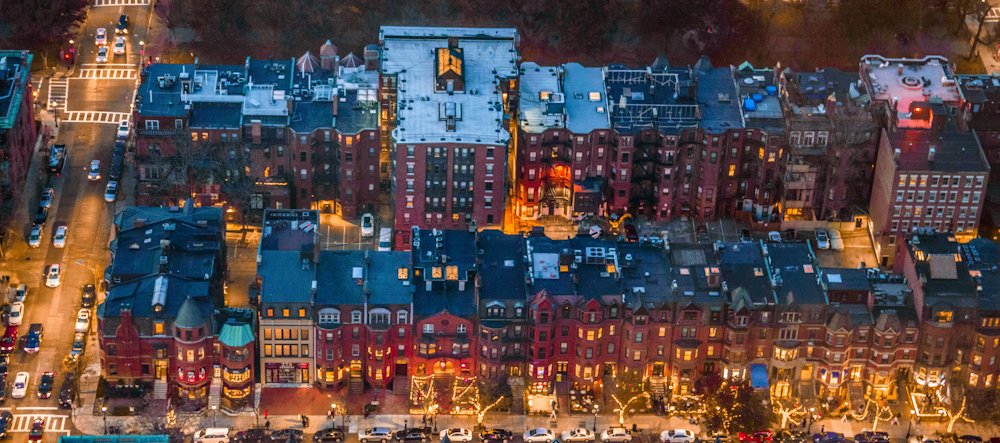
Aerial View of Boston Brownstones by Mohit Singh on Unsplash

There are plenty of neighbourhoods in Boston for house hunters to choose from. When searching for a property, consider the proximity of your home to your workplace and your children’s school. Access to public transport is also essential if you don’t own a vehicle – over a third of Boston residents use public transit for their commute.

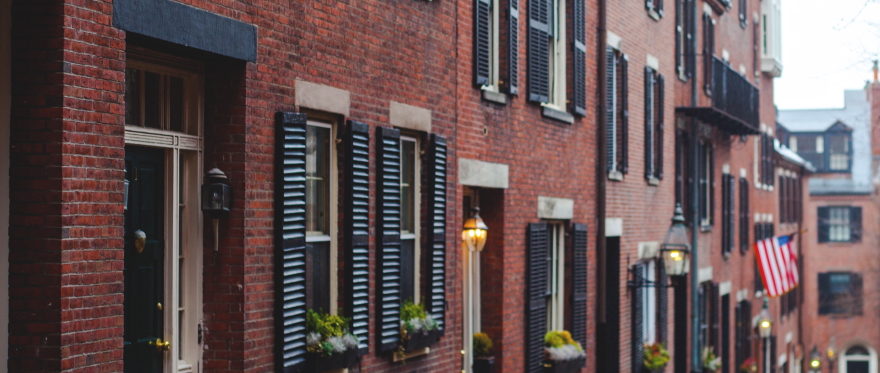
If you’re a young professional drawn to Boston’s spectacular waterfront views, East Boston offers more affordable options. This neighbourhood boasts beautiful views of Boston’s skyline, sits close to Logan Airport, and provides a quick commute to downtown via the Blue Line. Charlestown, one of Boston’s oldest neighbourhoods, appeals to young professionals who want walkability to downtown offices. The area exudes historic character, with cobblestones and gas street lamps lining streets of renovated red brick rowhouses.

Jamaica Plain suits families, young professionals, and singles drawn to the artsy side of life who want to form part of a close-knit community. The neighbourhood boasts the Emerald Necklace park system, a thriving independent food scene, and one of Boston’s most diverse populations. Cambridge – home to Harvard and MIT – ranks as one of the top family-friendly cities in the country. Free universal preschool and excellent schools draw families, while walkable access to Boston suits commuters. Somerville offers a similar appeal at lower prices, and Newton and Fenway are more family-friendly suburbs.

Areas and Suburbs in Boston


Types of accommodation in Boston

The different types of accommodation in Boston include large family homes, apartments, and brownstone rowhouses.

Brownstones/rowhouses

Brownstones are mostly historical homes built in the late 1800s. They’re usually three or four storeys high and constructed in rows with street-facing fronts. You’ll find these in affluent areas such as Back Bay, South End, and Beacon Hill, and they are highly sought after. They tend to be on the pricier side. While spacious and well built, brownstones often lack lifts, central air conditioning, or off-street parking. Car owners should take note.

Apartments

Boston has a variety of apartment types, from high-rise residential blocks to more exclusive condo and loft options. Modern buildings typically include air conditioning, central heating, and in-unit laundry, while older buildings may have shared facilities. Apartments near downtown are popular with university students, which results in high turnover rates – particularly in May, June and July, when students move out for the summer.

Detached houses

Detached or stand-alone houses in Boston cluster in the outer suburbs like Hyde Park, Newton, and West Roxbury. There are many options, from large family homes to smaller units. Houses can be expensive in Boston, but students often share them to split costs. Demand peaks before the September academic year starts, so expect competition if you’re house hunting in the summer months.


Finding accommodation in Boston

finding a house in Boston

Finding accommodation in Boston means using several resources. Online property portals like Boston Pads, Apartments.com, Zillow, and SpotEasy provide up-to-date listings and help you gauge market rates. Some relocating professionals have corporate relocation services through their employers. These companies shortlist properties, coordinate viewings, and negotiate terms.

Another option is to use an estate agent (also known as a realtor or broker), although this comes with costs. As of 2025, Massachusetts law requires that whoever hires the broker pays the broker’s fee – if the landlord hires the broker to list the property, they must pay the fee. If you hire your own broker to represent you in your search, you’ll pay their fee, which typically equals one month’s rent.

Useful links


Renting accommodation in Boston

Once you’ve found your ideal home, you’ll need to make an application to rent. If approved, you’ll then sign the lease and pay the deposit.

Making an application

With high demand for accommodation in Boston, landlords can be selective about tenants. Landlords typically ask for proof of income – generally three times the monthly rent – along with references and employment verification. Credit checks are standard practice.

Massachusetts law prohibits landlords from charging application fees, so you shouldn’t pay anything to apply. Given the low vacancy rates, move quickly when you find a property that suits you. Desirable apartments disappear within hours, especially before September when students flood the market.

Leases

Leases in Boston typically run for 12 months, with the majority starting on 1 September to align with the academic calendar. At the end of the rental term, leases can be renewed or ended by either party. Check your lease for specific notice periods.

Deposits

Massachusetts law limits what landlords can collect upfront. You’ll typically pay the first month’s rent, last month’s rent, a security deposit (capped at one month’s rent), and the cost of changing the locks. Landlords cannot legally require any other fees or deposits.

The security deposit must be held in a separate, interest-bearing account, and you’re entitled to receive annual interest statements. Within 10 days of moving in, your landlord must provide a Statement of Condition that documents any existing damage or defects in the premises. Review it and add your own notes – this will protect you when moving out.

Terminating the lease

If you need to end your lease early, check your contract for specific terms – some leases include early termination clauses with associated fees. You’re generally going to be liable for rent until the lease expires unless you sublet (if permitted) or the landlord finds a new tenant.

Standard notice periods require 30 days’ written notice if you’re on a month-to-month tenancy. At the end of your tenancy, landlords have 30 days to either return your security deposit in full or provide a detailed, itemised list of deductions for damages beyond normal wear and tear.

Read Accommodation in the USA for more on national rental processes.

Useful links


Utilities in Boston

Utilities in Boston vary by lease, so be sure to check what you’re responsible for before signing. Tenants typically pay their own utility bills, although some landlords include certain utilities in the rent.

calculating your utility bill

Electricity

Electricity in Boston is supplied through a deregulated market. Most Boston residents are automatically enrolled in Boston Community Choice Electricity (BCCE), the city’s municipal aggregation programme that often offers lower rates than standard utility pricing. Alternatively, you can opt out and purchase directly from Eversource or choose a third-party competitive supplier.

Eversource Energy manages electricity delivery and billing throughout Boston, regardless of which supplier you choose. To set up service, contact Eversource online or by phone with your new address, phone number, and email address. Set up an online account to manage payments and track usage.

Gas

Gas in Boston is provided by National Grid (operating as Boston Gas Company). Schedule your service activation at least a week before moving in – a technician will need to physically turn on the gas and conduct a safety inspection. Call National Grid’s customer service line during weekday working hours to arrange this appointment.

Pay your gas bills online through National Grid’s website, via bank transfer or in person at various locations. Budget billing helps smooth out seasonal spikes – Boston’s cold winters push heating costs up sharply.

Water

Water in Boston comes from the Quabbin and Wachusett Reservoirs, and it is managed by the Massachusetts Water Resources Authority and distributed by the Boston Water and Sewer Commission (BWSC). To activate the service, you’ll need a valid account number and activation code provided by your landlord. Pay bills online, by post, in person at a BWSC office, or through their automated phone system.

Bins and recycling

Bins and recycling in Boston are managed by the City of Boston Public Works Department. Download the free Trash Day App to find your collection schedule and see what’s recyclable. Place bins outside after 5pm the evening before collection day, or by 6am on collection day itself. You’re responsible for purchasing and replacing your own bins if they’re damaged.

For hazardous household waste, check the city’s published collection schedules. Appliances require a scheduled pickup – request this online or by calling Public Works, although a fee applies. Furniture can go out with your regular rubbish on collection day at no extra charge. Mattresses need separate scheduling – Massachusetts law requires them to be recycled.

The city provides recycling containers for buildings with six units or fewer. Larger buildings arrange their own containers through property managers. Boston operates a single-stream recycling system – place metal, glass, paper, plastic and cardboard together, but note that plastic bags and polystyrene aren’t accepted. The Trash Day App includes a searchable directory showing what’s recyclable and what isn’t.

Useful links

Areas and suburbs in Boston

The best places to live in Boston

The best places to live in Boston span several attractive areas and suburbs where you can choose to settle, both within the city itself and in the surrounding towns. Most people decide to rent rather than buy property in Boston. The city consistently ranks among the most expensive in the US for renters, although rental costs vary considerably depending on your chosen neighbourhood and lifestyle preferences.


Family-friendly suburbs in Boston

Boston

There are several very family-friendly suburbs in Boston that draw many newcomers moving with children who prioritise finding a home close to a good school. Many of these neighbourhoods – and some of the city’s best schools – sit just outside the city limits.

Westborough

Located about 30 miles (48km) west of Boston, Westborough is a family-friendly town with a strong community spirit and plenty of local events taking place on weekends. Westborough is home to some top-ranked schools, which is why many local and newly arrived families decide to live here. The commute to Boston’s city centre takes around 45 minutes by car or via the MBTA commuter rail, which stops directly in Westborough. Interstate 90, Route 30, and Route 9 all run through or near the town, making for straightforward highway access.

Newton

Newton sits just outside Boston and is popular with families thanks to its highly rated public schools (the district ranks #5 in Massachusetts). The town offers a quieter alternative for those working in the city. It’s one of the wealthiest areas in Greater Boston, and property prices are steep, but if your budget allows, it’s a fantastic place to raise a family.

Brookline

Brookline sits close to Boston, bordered by Jamaica Plain, Allston, and West Roxbury. The area has historically been home to some of Massachusetts’ best schools, and you’ll also find excellent parks, shops, and entertainment, alongside quality healthcare facilities. Brookline is also well served by the MBTA train and bus routes.

Public Transport in Boston 
Healthcare in Boston 
Entertainment in Boston


Young and trendy areas in Boston

Boston

As Boston is home to several universities, many of the city’s suburbs are filled with students. Rental costs in these areas tend to be a little lower, and they have a lively feel to them.

Wellesley

Wellesley is a town outside of Boston that is popular with young professionals and students owing to its proximity to numerous colleges and universities, including Wellesley College, Babson College, and Olin College of Engineering. Many families are also attracted to Wellesley thanks to its excellent public schooling system.

The area is well covered by Boston’s public transport network and is linked to the Boston city centre by the commuter rail and some commuter express bus services.

Allston-Brighton

Allston-Brighton is popular with students and young professionals, as it’s close to both Harvard and Boston universities. The area is home to some of Boston’s best nightlife and is full of upscale eateries, bars and pool halls, especially along Brighton Avenue. In addition, Allston-Brighton is well placed on public transport routes, allowing easy access to buses and the Green Line.

Back Bay

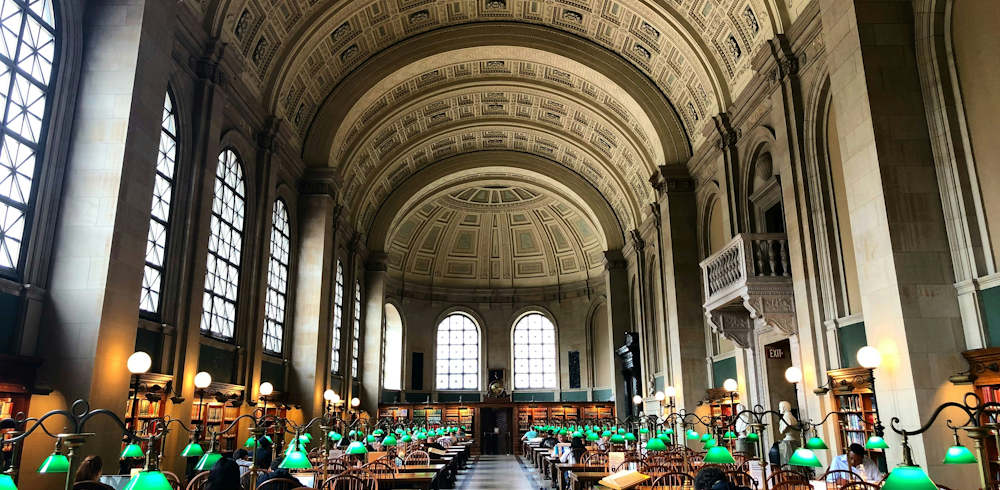
Famous for its nightlife and food scene, Back Bay is located on the outskirts of the Boston Common park, and is the perfect base for young and single newcomers looking to socialise in their new city. While rent in this neighbourhood is particularly high, new arrivals will enjoy their proximity to the picturesque Charles River and exciting shopping streets like Newbury Street. Back Bay is also home to the Boston Public Library, which claims the title of the first publicly supported municipal library in the USA.


City living in Boston

Boston

City living in Boston offers plenty of options if you want to be in the thick of things, although central neighbourhoods command a premium.

Charlestown

Charlestown sits on the banks of Boston Harbor and is popular among young professionals who want to be within walking distance of downtown offices. You can easily get around on foot, by subway or by bus. The neighbourhood has a lively atmosphere, with streets lined with cafés and bakeries. As Boston’s oldest neighbourhood and with its central location, rents run high.

Hyde Park and Jamaica Plain

The suburbs of Hyde Park and Jamaica Plain (or JP as residents often refer to it) are located to the south of Boston and are known for their open green spaces. These neighbourhoods are home to ethnically diverse populations and are known for their community spirit. Both areas are served well by commuter rail, the subway, and local bus services.

South End

South End is a cosmopolitan neighbourhood popular with young professionals and families. Lined with Victorian brownstones, it has some of the city’s most desirable real estate, so rental prices tend to be steep. The neighbourhood comes alive in the evening, particularly along Tremont Street, historically known as ‘Restaurant Row’ for its concentration of dining options.

Healthcare in Boston

Healthcare in Boston is among the finest in the United States, anchored by the city’s prestigious universities and their world-renowned medical research facilities. Most cluster in the Longwood Medical Area, next door to the Fenway district. Some hospitals in Boston are excellent teaching hospitals that are directly affiliated with specific academic institutions.

The Boston Public Health Commission oversees healthcare across the city – the country’s oldest health department, with roots that stretch back to 1799. This independent public agency runs everything from community health centres to infectious disease surveillance.

Pharmacies are widely available in Boston, from large chain stores to smaller local outlets, some of which are open 24/7. If you’re moving to Boston, make sure you have robust health insurance coverage to access the city’s top medical facilities.

Bear in mind that Boston’s world-class reputation comes with a caveat: the city has some of the longest appointment wait times in the country. New patients can expect to wait several weeks or even months for specialist consultations, so it’s wise to secure a primary care physician and schedule any necessary appointments well before you arrive.

Read Healthcare in the USA for more on the national healthcare system.

Here are some of Boston’s most highly rated hospitals.


Hospitals in Boston

healthcare professionals in a hospital

Boston Children’s Hospital

Website: www.childrenshospital.org 
Address: 300 Longwood Ave, Boston

Brigham and Women’s Hospital

Website: www.brighamandwomens.org 
Address: 75 Francis Street, Boston

Beth Israel Deaconess Medical Center

Website: www.bidmc.org
Address: 330 Brookline Avenue, Boston

Massachusetts General Hospital

Website: www.massgeneral.org 
Address: 55 Fruit Street, Boston

New England Baptist Hospital

Website: www.nebh.org 
Address: 125 Parker Hill Avenue, Boston

Tufts Medical Center

Website: www.tuftsmedicalcenter.org 
Address: 800 Washington Street, Boston

Education and Schools in Boston

The education system and schools in Boston are arguably the heart of America’s academic tradition. It is home to many prestigious academic institutions, including Harvard and MIT, as well as the oldest public education system in the US. Boston delivers education of exceptional quality, with parents having a wealth of excellent options for their children.

Families can choose from public schools (including charter and pilot programmes), alongside private and international institutions.


Public schools in Boston

The public school system in Boston benefits from Massachusetts’ well-funded state education system, which consistently ranks first nationally.

For Kindergarten through Grade 8, Boston uses a home-based assignment plan. Parents rank multiple schools within their catchment area, and the system assigns placements through an algorithm similar to a lottery. Families may not secure their first-choice school. Children with siblings in a particular school are given priority at that school.

It’s best to apply as early as possible to ensure the widest choice of schools. High school admissions work differently – students can apply to any school citywide, not just those in their catchment area. There are also publicly funded charter and pilot schools in Boston that have greater autonomy in their curriculum and teaching methods. That said, competition for places is fierce, and statewide waitlists contained over 20,000 applicants in 2025.

Read Education and Schools in the USA for more on the national education system.

Useful links


Private and international schools in Boston

Private and international schools in Boston range from long-established preparatory academies and faith-based institutions to schools that offer progressive, alternative approaches to education.

International schools follow curricula from France, Germany and the UK, among others. Tuition varies widely across these institutions. Most offer extensive extracurricular programmes alongside exceptional facilities and teaching staff.

Read up on the Best International Schools in Boston


Special educational needs in Boston

When it comes to children with special educational needs in Boston, the city serves students with learning and developmental disabilities through well-established programmes.

There are multiple federal laws in place in the US to ensure that children with disabilities have fair access to quality education at no cost, regardless of state. All of Boston’s public schools include a Resource/Learning Centre equipped to provide specialised and individualised instruction for up to 10 students.

Both public and private schools usually have special programmes in place to support students with learning difficulties. Students with severe disabilities can access specialised facilities that offer programmes tailored to their specific needs. Boston currently operates three public special needs schools for students with disabilities.

Useful links


Tutors in Boston

Thanks to Boston’s position as an educational powerhouse in the US, parents have an excellent choice of tutors in Boston to support their children. Students seek tutoring for various reasons – from catching up in maths to preparing for college entrance exams – and Boston offers numerous qualified private tutors.

It’s wise to start by asking the child’s school or other parents in the area for a recommendation. Families can also work with established tutoring companies. These companies offer various packages, including intensive subject-specific programmes, one one-on-one home sessions and small group instruction.

Private tutors help students address knowledge gaps, strengthen particular subjects and build confidence in unfamiliar academic environments.

Useful links

International Schools in Boston

International schools in Boston are ideal for newly arrived foreign families, as they offer familiar curricula from home, including French, German, and British options. Classes are typically taught in the language of the school's home country, although bilingual teaching is often paired with the standard lessons.

Your children will likely feel more at home among peers who understand the experience of relocating to a new country. Attending a school that mirrors the system in your country of origin can ease the transition and make it easier to reintegrate should you eventually move back home.

You can expect exceptional facilities and high teaching standards at these institutions. Extracurricular activities also tend to be more varied than in local public schools. That said, you should budget carefully or negotiate for an education allowance in your relocation contract, as international schools in Boston are expensive.

Boston has a relatively small selection of international schools, but the high quality makes up for the limited choice. Note that many offer busing services, which can be a lifesaver given the city's sometimes unpredictable public transport network.

Read more about Education and Schools in Boston


International schools in Boston

students in a classroom

British International School of Boston

The British International School of Boston provides a global community where the coursework is designed to drive your child's success. As part of the Nord Anglia Education Group, BISB personalises learning to suit individual needs while using its global connections to develop confident, world-ready students.

Gender: Co-educational
Curriculum: British (English National Curriculum and Cambridge IGCSE), International Primary Curriculum and International Baccalaureate
Ages: 18 months to 18 years
Website: www.nordangliaeducation.com/bisb-boston

École Française de Boston

With 400 students representing 25 nationalities, École Française de Boston offers an environment that nurtures social-emotional development alongside academics. The school focuses on developing the whole child, so you will find music, art and art history alongside the sports programmes.

Gender: Co-educational
Curriculum: French
Ages: 21 months to 11 years
Website: www.efgboston.org

German International School of Boston

Offering a fully bilingual education in Boston, the German International School of Boston fosters culturally aware and socially confident graduates. Your children can graduate with either the German International Abitur or the US High School Diploma, learning in both German and English throughout their time there.

Gender: Co-educational
Curriculum: German and American
Ages: 3 to 18 years
Website: www.gisbos.org

International School of Boston

The International School of Boston prizes multilingualism, offering programmes in English, French, Spanish and Chinese at different grade levels. Beyond the rigorous academic programming, ISB offers a variety of extracurricular activities to keep your children engaged, from athletics and basketball to fencing and archery.

Gender: Co-educational
Curriculum: French and International Baccalaureate
Ages: 3 to 18 years
Website: www.isbos.org

Lifestyle in Boston

Boston’s warm and friendly atmosphere will make you feel right at home. People of all persuasions find that the lifestyle in Boston offers attractions to suit all tastes. From shopping, exciting nightlife and world-class sporting facilities to a fabulous variety of restaurants, you won’t be at a loss for things to do in Boston.


Shopping in Boston

If you’re in need of some retail therapy, you’ll enjoy perusing Boston’s shopping districts and many boutiques, department stores, malls, and outlets. Many local goods can be found at the Faneuil Hall Marketplace, while other well-known shopping areas include the affluent Newbury Street and Beacon Hill, which is known for its antiquities.


Eating out in Boston

Eating out in Boston means you’ll be spoilt for choice. You can pick and choose from a diverse array of cuisines from countless restaurants across the city. With a large Irish community, it’s not difficult to find fantastic Irish fare in the city’s many Irish pubs. There are also many Italian restaurants to try out, along with countless Asian and other ethnic restaurants. Local cuisine consists of seafood from the New England coast, such as clam chowder and lobster. Burger and takeaway joints are common, and the city has a thriving food truck scene.


Entertainment and nightlife in Boston

Boston Public Library by CJ on Unsplash

While most Bostonians prefer more relaxed evenings, the city’s large student population enjoys nights out on the town, and bar hopping is popular. Lansdowne Street near Fenway Park is a popular gathering spot with sports bars and pubs, particularly on game days.

Boston’s arts scene is also well worth sampling. The Theatre District is home to an array of theatres with regular performances to rival New York’s Broadway. As there are many restaurants in the area, you can enjoy a full night out of theatre and dining. Cambridge and Watertown, just outside Boston, also boast many theatrical productions, while the Boston Common hosts open-air productions during the summer months.


Outdoor and sporting activities in Boston

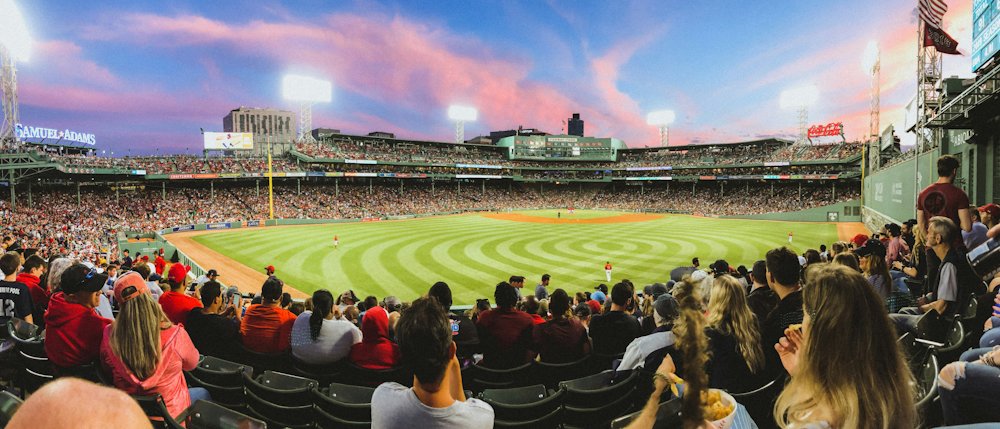
Baseball Game in Boston by Garrett Butler on Unsplash

Boston is a sports-mad city, home to several major league sporting teams, including the Boston Red Sox baseball team and the New England Patriots football team. Bostonians are passionate about supporting their teams during major games.

You can also enjoy an active outdoor lifestyle in the warmer months thanks to Boston’s many public parks. Boston Common is the oldest city park in the US and sits adjacent to the equally famous Public Garden. Other green spaces ideal for exploration with the whole family include the Charles River Esplanade, Jamaica Pond, and the Arnold Arboretum.

Summer in Boston


See and do in Boston

With one of the country’s highest concentrations of national historic landmarks, Boston has plenty of attractions to visit. It’s a city of many American ‘firsts’, with the city having established the first American subway system, public health department, public school, public park, and free municipal library. But apart from its many historical attractions, the city is also blessed with lush parks, hiking trails and interesting museums.

Below are some of the best things to see and do in Boston.

Boston Public Garden by Sean Sweeney on Unsplash

Boston Public Garden

The Boston Public Garden is a tranquil park famed as the country’s first public botanical garden. Situated in the heart of Boston, it forms part of the city’s famed ‘Emerald Necklace’ of parks. The garden offers scenic walking routes and swan boat rides on the pond.

Museum of Fine Arts

A beautiful building in its own right, the Museum of Fine Arts houses nearly 450,000 works by some of the world’s most renowned artists in history, including Manet, Degas, and Van Gogh.

Black Heritage Trail

As Massachusetts was among the first states to abolish slavery in 1783, Boston developed a strong abolitionist Black community primarily made up of freed and escaped enslaved people. The Black Heritage Trail meanders past more than 15 sites that illustrate local Black history, including museums, meeting places, and the homes of important figures in the emancipation struggle.

Boston Tea Party Ships and Museum

This interactive, family-friendly attraction allows you to learn about and re-enact the Boston Tea Party, a 1773 demonstration by a group of American revolutionaries. These revolutionaries stormed British ships carrying tea and threw their cargo overboard as a protest against unfair taxation. This event was critical to the start of the War of Independence.

Faneuil Hall Marketplace

The Faneuil Hall Marketplace has been in operation since the 18th century and features designer stores, restaurants, cafés, stalls, and even performing entertainers such as jugglers, mimes, and musicians.


Meeting people and making friends in Boston

Meeting people and making friends in Boston is easier than you might think. The city has an active social scene centred on shared interests, whether sports leagues, outdoor activities, cultural events or dining groups. Meetup.com is particularly popular here, with groups covering a wide range of activities, including hiking, kayaking, professional networking, language exchange, and more.

Volunteering offers another excellent way to meet people. Boston Cares, New England’s largest volunteer agency, places thousands of volunteers annually across more than 150 local organisations. You’ll find opportunities ranging from working with children to supporting food banks and animal shelters, all designed to fit your schedule.

Useful links

Kids and Family in Boston

Having kids and family in Boston is generally an enjoyable experience. The choice of attractions, good hospitals and excellent schools makes Boston an ideal city to raise a family.

Parents should consider living in one of Boston’s family-friendly suburbs. The Boston public school system assigns students through a home-based plan with schools near their homes. Parents thinking of enrolling their children in Boston public schools may want to consider moving to areas that allow access to specific schools.


Educational activities in Boston

Educational activities in Boston include several child-friendly options that work in any weather. The Children’s Museum provides an interactive indoor playground where children learn through play. The Franklin Park Zoo allows children to connect with wildlife, while the New England Aquarium lets children meet the marine life that lives off of Boston’s shores.

Public School System in Boston
International Schools in Boston


Outdoor activities in Boston

Watching baseball at Fenway Park is a classic Boston activity. View Boston at the Prudential Tower presents sweeping 360-degree views of Boston from 750ft (229m) up, while Boston Harbor cruises are a fun summer activity. Families can also visit one of the many connecting parks that make up Boston’s Emerald Necklace.

Weather in Boston


Indoor activities in Boston

Boston has the amenities of a modern city, including shopping centres with cinemas. Parents will also find an active children’s theatre scene in Boston, at venues such as the Puppet Showplace Theater.

Lifestyle and Activities in Boston

Getting Around in Boston

Since it’s a relatively compact city, getting around Boston is fairly easy on foot or by using public transport. Driving is often the most convenient option for travel outside Boston proper, but most residents choose not to drive around the downtown area due to the traffic congestion, high parking fees, and the city’s confusing street layout.

You’ll find that there is a wealth of public transport options available in Boston, which will make getting to grips with the city much more manageable.


Public transport in Boston

Boston has an integrated public transport system run by the Massachusetts Bay Transportation Authority (MBTA). It’s convenient and relatively inexpensive. The MBTA comprises the subway, buses, water shuttles, and commuter rail.

The CharlieCard is a contactless smartcard that forms the basis of the MBTA payment system. Since August 2024, you can also tap to pay with contactless credit cards, Apple Pay, Google Pay or smartwatches on subway and bus services. There are a variety of options that allow you to pick a suitable package for your needs.

Subway in Boston by Sydney Angove on Unsplash

Subway

Boston’s subway, or ‘the T’, comprises three heavy rail lines (Red, Orange, and Blue), plus the branching Green Line and the Mattapan Trolley. This network covers all the main areas of the city. If you use a CharlieCard for one-way rides, you get free transfers on most subway and local bus routes. The subway service typically starts around 5am. On weekdays, service ends around 1am, while Friday and Saturday nights see extended hours, with final trains departing between 1am and 2.30am, depending on the line.

Bus

You’ll find that while bus travel in Boston may be slower than using the subway, a bus ride will often be cheaper and take you closer to your final destination. There are also express buses in Boston that travel over longer distances. These are pricier than regular buses.

Ferries

The MBTA runs a commuter ferry service with eight terminal lines. There are also non-MBTA ferries and water taxis available at several ports.

Commuter rail

The commuter rail system in Boston is primarily used for travelling to towns outside the city. Since these trains are infrequent, it’s much faster to use the subway when travelling in Boston.

Useful links


Taxis in Boston

Boston taxi fares sit in the mid to upper range among US cities. Unless you plan to share a taxi with a group of friends, it makes more sense to use the city’s well-developed public transport system.

Rideshare apps such as Uber and Lyft operate in Boston, and like regular taxis, they allow for more specific routes at a more affordable price. As Uber and Lyft services are charged directly to your bank account, they allow for travel without carrying cash.

Useful links


Driving in Boston

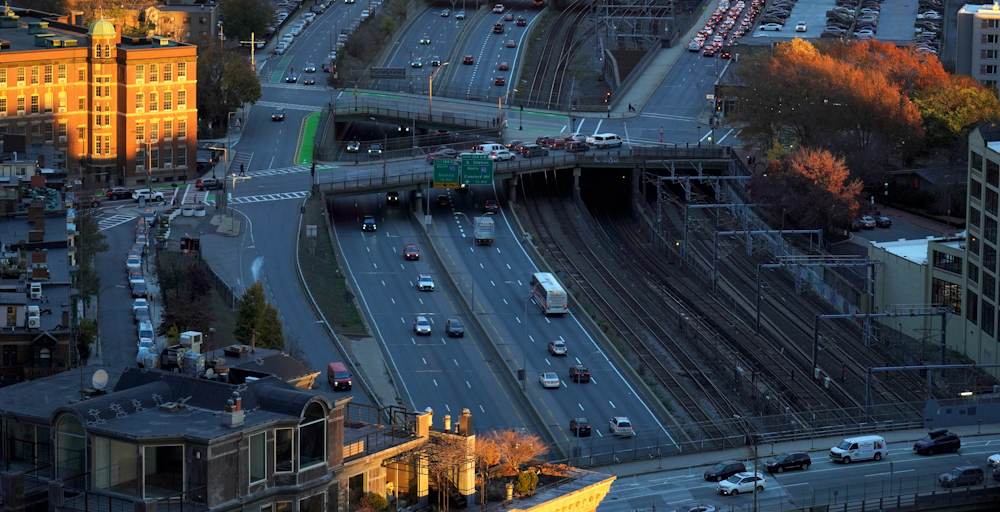
Traffic on the I90 in Boston by Brett Wharton on Unsplash

Navigating the streets of Boston is difficult for newcomers. Unlike other US cities, Boston’s streets do not follow a grid system or centre on a geographical feature like a river or lake. Many locals use public transport or taxis rather than driving, due to the traffic congestion in the city centre and the parking, which is both limited and expensive. If you choose to drive, you’ll need to secure a local driver’s licence and budget for petrol, parking and vehicle maintenance fees.

Driver’s licences

If you plan to drive in Boston, you’ll need a valid licence. Newcomers from other US states can exchange their licence for a Massachusetts one at the Registry of Motor Vehicles. International arrivals may be able to drive on a foreign licence temporarily, but will typically need to obtain a Massachusetts driver’s licence within a set timeframe. Requirements vary depending on your country of origin, so check with the RMV for specific guidance.

Read Transport and Driving in the USA for more on securing a local driver’s licence.

Useful links


Walking in Boston

Boston is a relatively small and safe city, and many locals walk around the city centre. Walking allows you to see more of Boston than you would on the subway, although walking is not always easy in the winter months when the snow and wind can pose a significant obstacle to pedestrians.

Weather in Boston


Cycling in Boston

Cyclist in Boston by Yassine Khalfalli on Unsplash

Cycling in Boston has become increasingly popular thanks to the city’s compact size and relatively flat terrain, although winter weather can make it challenging. The city has actively expanded its cycling infrastructure in recent years, with separated bike lanes now available in multiple neighbourhoods. The Bluebikes bike share system now offers over 5,500 bikes at more than 500 stations across the metro area.

Useful links